8 Sweet Ways Dogs Show They Care About Each Other
Dogs are remarkably social creatures with deep emotional connections to their canine companions. Beyond their loyalty to humans, our furry friends develop meaningful bonds with other dogs that showcase their capacity for empathy and affection.
The ways dogs express care for each other reveal a complex social intelligence that has evolved over thousands of years. These heartwarming behaviors demonstrate why dogs truly deserve their title as man’s best friend – they’re also each other’s best friends.
1. Mirroring Emotions and Body Language
Dogs are natural empaths, instinctively reflecting the emotional states of their companions through subtle body language. When one dog feels excited, others often catch the contagious joy, mirroring wagging tails and playful bounces without conscious effort.
This emotional synchronization goes beyond happy moments. A stressed or fearful dog might see their companion adopt similar cautious postures – ears back, tail tucked, body lowered – as a form of solidarity. It’s their way of saying, “I understand what you’re feeling.”
This mirroring behavior strengthens their social bonds and helps create harmony within the pack. By tuning into each other’s emotional frequencies, dogs create a shared experience that reinforces their connection and builds trust between them.
2. Comforting Touch Through Nuzzling and Leaning
Physical contact serves as a powerful language of comfort between canine companions. A gentle nuzzle against another dog’s neck or a subtle lean against their body communicates support during moments of uncertainty or anxiety.
After a stressful experience like a thunderstorm or vet visit, dogs often seek this physical reassurance from their trusted companions. The pressure of body contact releases oxytocin – the bonding hormone – in both the comforter and the comforted, creating a mutual calming effect.
This touching behavior isn’t random but deliberately timed for when it’s most needed. Like a friend putting an arm around your shoulder, these small gestures of physical connection speak volumes about the depth of canine relationships.
3. Social Grooming as a Sign of Affection
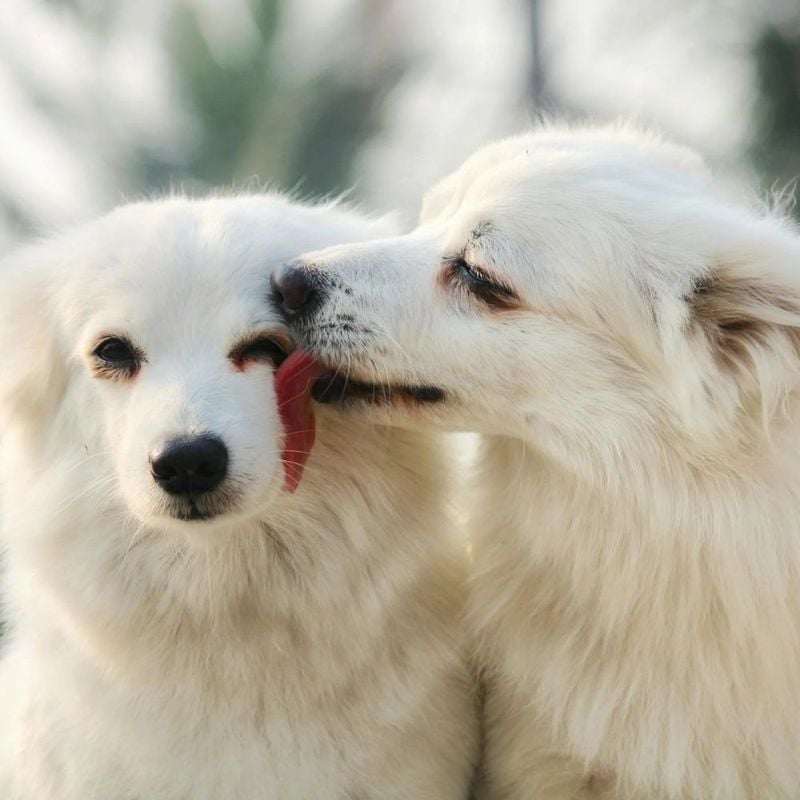
When one dog gently licks another’s ears or face, they’re engaging in more than just hygiene – they’re performing an act of deep social bonding. This grooming ritual often targets areas the recipient can’t easily reach themselves, showing thoughtful consideration.
The rhythmic, gentle licking releases endorphins that create feelings of pleasure and relaxation for both the giver and receiver. You’ll notice the dog being groomed often closes their eyes in contentment, completely trusting their companion.
Interestingly, social grooming follows canine social hierarchies, with more confident dogs typically initiating the grooming. However, even dogs of equal status take turns caring for each other, creating balanced relationships built on mutual affection and respect.
4. Playful Mood-Lifting Invitations
Have you ever seen a dog approach a dejected companion with a play bow and bouncy movements? This charming behavior shows remarkable emotional intelligence. The playful dog recognizes their friend’s low spirits and deliberately tries to cheer them up.
The play invitation often comes with exaggerated movements – front legs lowered, rear end up, tail wagging enthusiastically. These invitations are hard to resist, even for a dog feeling down. It’s like a friend showing up with tickets to your favorite show when you’re having a rough day.
Most impressive is the persistence shown when the first invitation is declined. A caring dog will modify their approach, perhaps bringing a favorite toy or using gentler movements until they successfully engage their companion.
5. Loyal Companionship During Illness
When a dog falls ill or gets injured, their canine friends often demonstrate remarkable loyalty by refusing to leave their side. This steadfast companionship goes beyond mere curiosity – healthy dogs will deliberately adjust their normally active routines to remain close to their ailing friend.
They’ll often lie nearby, occasionally checking in with gentle sniffs or soft nudges. Some dogs have been observed bringing toys or food to their sick companions, though the items may not be practical help. The sentiment behind the gesture speaks volumes.
This protective behavior has evolutionary roots in wolf packs, where group survival depended on caring for vulnerable members. Today’s domesticated dogs retain this instinctive compassion, showing that their capacity for care runs deep in their DNA.
6. Stepping In to Prevent Conflicts
Some dogs naturally take on the role of peacekeeper within their social groups. When tensions rise between other dogs, these canine mediators step between the conflicting parties with calming signals – head turns, slow movements, or playful diversions to defuse the situation.
This intervention behavior demonstrates sophisticated social awareness. The mediator dog must read subtle cues indicating brewing conflict and understand the social dynamics well enough to intervene effectively. They’re not just reacting to barks or growls but anticipating problems before they escalate.
Particularly fascinating is how these mediators adjust their approach depending on the dogs involved. With puppies, they might use gentle play to redirect energy, while with adult dogs, they employ more respectful, deliberate interruptions that acknowledge canine social etiquette.
7. Vocal Alerts When Friends Are in Distress
Dogs develop distinctive vocalizations specifically for alerting others to a companion’s distress. Unlike their regular barks or playful sounds, these alarm calls carry unique tonal qualities that communicate urgency and concern.
When a dog becomes separated from the group or finds themselves in trouble, their friend might produce high-pitched whines or specific bark patterns that serve as a call for help. This vocalization often continues until other dogs or humans respond to the situation.
Research suggests these alert behaviors demonstrate genuine empathy rather than simple mimicry. The alerting dog shows physiological stress responses that mirror their distressed friend’s, indicating they’re not just reacting to the situation but genuinely sharing in their companion’s emotional experience.
8. Generous Resource Sharing
While dogs naturally protect valuable resources like food and toys, close canine companions often break this rule in touching displays of generosity. Bonded dogs might share prized sleeping spots, allowing a friend to join them in a favorite sunny patch or cozy bed.
Food sharing represents an especially meaningful gesture in the dog world. A dog who allows another to eat from their bowl or deliberately leaves some food behind shows remarkable trust and affection. This behavior contradicts their instinctual resource guarding, making it all the more significant.
The sharing often follows subtle patterns based on relationship dynamics. An older dog might allow a puppy greater access to resources, or a confident dog might share with a more timid companion – demonstrating how these generous behaviors strengthen their social bonds.