Preventing and Managing Hip Dysplasia in Large Dog Breeds
Most advice about hip dysplasia shows up after the diagnosis, once X-rays confirm what you already suspected from watching your dog struggle to get up. But if you own a large breed, or you’re about to bring one home, the real opportunity starts much earlier than that. Hip dysplasia isn’t a single event, it’s a slow process shaped by genetics, growth, weight, and daily habits that stretch across a dog’s entire life. That means the choices you make at eight weeks old, at two years old, and at ten years old all matter, just in different ways. This guide walks through what to actually do at each stage, from the breeder you choose to the ramp by your back door decades later.
Start With the Breeder, Not the Puppy
If you’re choosing a large breed puppy, the single highest-leverage decision happens before you ever meet the dog: picking a breeder who screens for hip health. Reputable breeders test their breeding pairs through organizations like OFA or PennHIP and can show you the results, not just tell you about them verbally. This doesn’t guarantee a puppy free of dysplasia, since the condition involves multiple genes and isn’t purely inherited in a simple way, but it meaningfully shifts the odds in your favor.
It’s worth asking pointed questions here, even if it feels awkward. How many generations back has hip health been tracked? Have any littermates developed issues? A breeder who gets defensive about these questions is telling you something important. This step doesn’t cost you anything extra once you’ve found the right breeder, but skipping it can cost a great deal later.
Raising a Puppy Without Rushing the Growth
Large breed puppies grow fast, and that speed is exactly what makes early management so important. Bones, joints, and growth plates are still forming through much of the first year, so a diet that’s too calorie-dense or too high in calcium can push growth faster than the skeleton can handle, which puts uneven stress on developing hip joints. Feeding a large breed puppy formula rather than a standard puppy food, and resisting the urge to overfeed a dog who always seems hungry, actually protects the joints you’re trying to build.
Exercise needs the same restraint. It’s tempting to let a bouncy young dog run and jump as much as it wants, but repeated high-impact activity, like jumping off furniture or long runs on pavement, loads joints that aren’t ready for it yet. Short, gentle walks and supervised play are plenty at this stage. The general rule vets tend to give is to avoid forced, repetitive impact until growth plates close, which for large breeds is usually somewhere between twelve and eighteen months. It feels like holding a young dog back, but you’re really just buying its joints time to develop properly.
Early Adulthood: Watching for the First Warning Signs
Once a large breed dog reaches full maturity, hip dysplasia doesn’t announce itself loudly. It shows up as subtle changes that are easy to write off as a dog just having an off day. Slight stiffness after a long walk, a bit of hesitation before jumping into the car, or a gait that looks a touch less fluid than it used to are all worth paying attention to, even in a dog that seems otherwise fine.
This is also the stage where keeping a lean body condition pays off the most. A dog carrying even a little extra weight puts disproportionate pressure on hip joints that may already be structurally compromised, so maintaining a visible waist and easily felt ribs matters more here than most owners realize. Exercise should stay consistent and low-impact where possible, favoring things like swimming or steady walks over explosive sprinting or repetitive jumping. If you do notice early signs, getting your dog evaluated now, rather than waiting for obvious lameness, gives you far more management options down the line.
The Senior Years: Adapting Rather Than Retreating
As a large breed dog ages, hip dysplasia and the arthritis it often leads to tend to become more noticeable, but that doesn’t mean activity should stop altogether. It means adapting it. Shorter, more frequent walks usually work better than one long outing, and swimming remains one of the best ways to maintain muscle without stressing the joint.
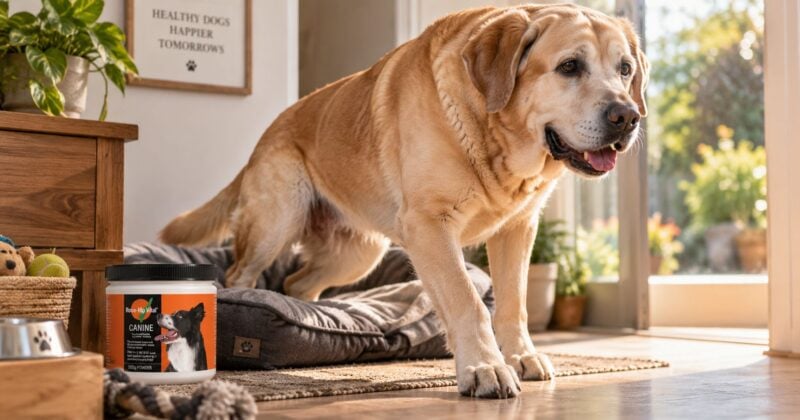
Home modifications start to matter a lot at this stage too. Ramps for the car and favorite furniture, orthopedic bedding, and non-slip rugs on hard flooring all reduce daily strain and lower the risk of a bad slip setting your dog back. Nutrition also plays a bigger supporting role here. Ingredients like glucosamine, omega-3 fatty acids, and rosehip-based compounds are commonly used long-term to support joint comfort and mobility, and products such as rosehip joint supplements for dogs are one option some owners add to their senior dog’s daily routine alongside these other habits. None of this replaces veterinary care. When discomfort is clearly affecting quality of life, your vet may recommend pain management options ranging from anti-inflammatories to, in more advanced cases, surgery. Getting ahead of that conversation, rather than waiting for a crisis, tends to produce better outcomes.
The Bottom Line
Hip dysplasia in large breeds isn’t something that appears out of nowhere in old age, it’s shaped by decisions made across a dog’s whole life. Choosing a breeder who screens for it, feeding and exercising a growing puppy with restraint, watching closely through early adulthood, and adapting rather than giving up as your dog ages all add up to meaningfully better outcomes. None of it is complicated. Consistent daily habits around weight, movement, and joint nutrition tend to matter more than any single dramatic intervention, so build them in early and keep them going for the long haul.