The 20 Worst Puppy Foods
A puppy eats more food for its size than at almost any other time in its life, and what goes into that bowl helps build the bones, muscles and brain it will use for years. That makes a bad bag of puppy food a bigger deal than it sounds.
This list is based on the public record, not taste tests. The first group are puppy foods that were pulled from shelves in recalls for problems like toxic mold, too much vitamin D, Salmonella or plastic. The next group are grain-free puppy recipes, heavy in peas, lentils or chickpeas, from the brands named most often in the FDA’s reports of a heart disease called dilated cardiomyopathy (DCM). The last two are cheap grocery-store puppy foods built on corn and colored with artificial dyes.
A recall covers certain lots, not every bag ever made, and many of these companies fixed the problem long ago. But if you’re choosing food for a new puppy, the history is worth knowing. For the bigger picture, see our list of the dog food brands with the most recalls.
1. Sportmix Premium Puppy
In late December 2020, Midwestern Pet Foods recalled several lots of Sportmix dog food after tests found high levels of aflatoxin, a poison made by a mold that grows on corn and other crops. In January 2021 the company widened the recall to every dry dog and cat food containing corn made at its Oklahoma plant with an expiration date on or before July 9, 2022. Sportmix Premium Puppy, in 16.5- and 33-pound bags, was on that list.
The toll was heavy. As of January 21, 2021, the FDA said it knew of more than 110 pets that had died and more than 210 that were sick after eating the recalled foods, though not every case was confirmed as aflatoxin poisoning.
Aflatoxin attacks the liver. Signs include sluggishness, not eating, vomiting, yellowing of the eyes or gums, and diarrhea. Puppies are small, so it takes less of the toxin to hurt them. The FDA’s aflatoxin alert still lists the recalled products.
2. Pro Pac Performance Puppy
Pro Pac is another Midwestern Pet Foods brand, and its Performance Puppy formula in the 40-pound bag was part of the same expanded aflatoxin recall in January 2021. Because Midwestern pulled all corn-containing dry foods made at its Oklahoma plant with expiration dates on or before July 9, 2022, more than 1,000 lot codes were involved, too many to list one by one.
This recall shows a danger that has nothing to do with the recipe on paper. Aflatoxin comes from mold on grain, and it gets into pet food when contaminated corn isn’t caught by testing. One bad load of corn can end up in several brands made in the same plant.
That makes a big bag like this one a special risk. A 40-pound bag can last a puppy for weeks, so a contaminated batch may be eaten every single day before anyone notices a problem. The FDA closed out this recall in October 2021.
3. Sportsman’s Pride Large Breed Puppy
In late 2018, the FDA warned pet owners about several dry dog foods with potentially toxic levels of vitamin D. As part of that wave, Sunshine Mills recalled select bags of Sportsman’s Pride Large Breed Puppy with best-buy dates from November 1, 2018 through November 8, 2019.
Dogs need some vitamin D, but too much is dangerous. According to the FDA, excess vitamin D can cause vomiting, loss of appetite, increased thirst and urination, heavy drooling and weight loss, and at very high levels it can lead to kidney failure or death.
For a large breed puppy, this was a particularly bad mistake. Vitamin D helps control how the body absorbs calcium, and big puppies are the most sensitive to calcium and mineral imbalances while their bones are growing. A food sold to support healthy growth in big dogs ended up recalled for a problem with one of the nutrients that matters most to their bones.
4. Evolve Chicken & Rice Puppy
Evolve Chicken & Rice Puppy dry food was the other puppy formula in the same 2018 Sunshine Mills recall. The 14- and 28-pound bags with best-buy dates from November 1, 2018 through November 8, 2019 were pulled because of potentially elevated vitamin D.
It was part of a wider problem that winter. The FDA’s alert covered recalls by nine companies, including Sunshine Mills, Kroger, ELM Pet Foods, ANF, Lidl and Nutrisca, all for the same issue in dry dog food.
A recall like this is hard for owners to see coming, because nothing on the label looks wrong. Vitamin D is added to nearly every complete dog food, and the trouble comes from too much of it in a batch. If your puppy has vomiting, a big jump in thirst, drooling or weight loss after starting a new bag, stop the food, keep the bag, and call your vet. The FDA closed this recall in July 2020.
5. Hill’s Science Diet Puppy Chicken & Barley Entrée
Hill’s is one of the brands vets recommend most, which is why its 2019 recall shocked so many owners. Starting January 31, 2019, Hill’s recalled canned dog foods because of elevated vitamin D, and by spring the recall had grown to 33 varieties. One of them was Science Diet Puppy Chicken & Barley Entrée in 13-ounce cans.
Most of the recalled cans were Prescription Diet and adult Science Diet foods, and only one lot of the puppy entrée was involved. According to the FDA, no dry foods, cat foods or treats were affected.
Still, a puppy is the worst candidate for too much vitamin D. Young dogs are small and growing fast, and the FDA warned that high vitamin D can cause vomiting, loss of appetite, increased thirst and urination, drooling and weight loss, and in severe cases kidney failure. The FDA closed the recall in December 2021.
6. Victor Purpose Grain Free Active Dog & Puppy
In late October 2023, Mid America Pet Food, the maker of Victor dog food, recalled products for possible Salmonella. In November it expanded the recall to foods made at its Mount Pleasant, Texas plant with best-by dates before October 31, 2024. Victor Purpose Grain Free Active Dog & Puppy, in 5-, 15- and 30-pound bags, was on the FDA’s list.
This recall stood out because people got sick. The FDA and CDC linked it to a Salmonella outbreak in seven people in seven states, and six of them were babies one year old or younger.
Salmonella doesn’t always make dogs ill, but a dog can still carry it and spread it to people through saliva and poop. That’s a real concern in a home with a new puppy and small children. Wash your hands after handling dry food, wash the bowl and scoop often, and keep little ones away from the food bag.
7. Diamond Puppy Formula
In April 2012, Diamond Pet Foods expanded an earlier recall to include Diamond Puppy Formula dry food after testing found Salmonella. It was only the start. Within weeks the recall grew to cover many brands made at Diamond’s plant in Gaston, South Carolina, between December 2011 and April 2012.
The CDC traced a human outbreak of Salmonella Infantis to dry dog food from that plant. By the CDC’s final count in July 2012, 49 people were sick: 47 in 20 states and two in Canada. Of the 24 with information available, 10 were hospitalized.
Diamond makes food for other companies too, so one plant’s problem spread across several brands at once, including some you’ll see further down this list. For puppy owners, it was a reminder that feeding time is hand-washing time, especially for kids who like to help fill the bowl. The CDC’s outbreak page tells the full story.
8. Wellness Complete Health Super5Mix Large Breed Puppy
Wellness is a premium brand, but in 2012 one of its puppy recipes was made at the same Diamond plant in South Carolina. On May 4, 2012, WellPet recalled Wellness Complete Health Super5Mix Large Breed Puppy in 15- and 30-pound bags and 5-ounce samples with best-by dates of January 9 through January 11, 2013, after Diamond told the company about possible Salmonella.
WellPet said no other recipes were affected, and that it no longer bought any products from Diamond.
The lesson for puppy owners is that the name on the bag doesn’t always tell you who made the food. Many pet food brands pay outside plants to make some of their recipes, and a single plant can turn out food for several companies. If you want to know where your puppy’s food is made, check the bag or ask the company. A good brand will tell you.
9. Solid Gold WolfCub Large Breed Puppy
Solid Gold, a holistic pet food brand, was another company caught up in the 2012 Diamond recall. Its WolfCub Large Breed Puppy food, in 4-, 15- and 33-pound bags with the batch code SGB1201A3X and a best-by date of December 30, 2012, was recalled because it had been made at Diamond’s Gaston, South Carolina plant during the Salmonella problem.
The name tells you what owners were paying for: a puppy food made for big breeds, with a natural, wolf-inspired image. None of that helps if the plant that makes it has a contamination problem.
Large breed puppies eat a lot, so owners often buy the biggest bags, and a contaminated bag can sit in a home for weeks. Keep the bag, or a photo of its lot code and best-by date, until the food is gone. That way you can check it in seconds if a recall is ever announced.
10. Eukanuba Small Breed Puppy
In August 2013, Procter & Gamble, which owned Eukanuba and Iams at the time, recalled certain lots of dry dog and cat food because of possible Salmonella. The recall included three Eukanuba puppy foods: Base Small Breed Puppy, Base Maintenance Puppy, and a 44-pound Professional Feeding Bag Small Breed Puppy.
The affected bags had best-by dates between November 6 and November 14, 2014. P&G said the recalled food was a tiny share of its yearly production, and that no illnesses had been reported.
Even so, small breed puppies are a worrying group for any contaminated food. They are tiny, they can get dehydrated quickly from vomiting or diarrhea, and they usually live in very close contact with their owners. If your puppy gets sudden diarrhea, vomiting or a fever, call your vet. Eukanuba has since been sold to Mars.
11. Nutro Ultra Puppy
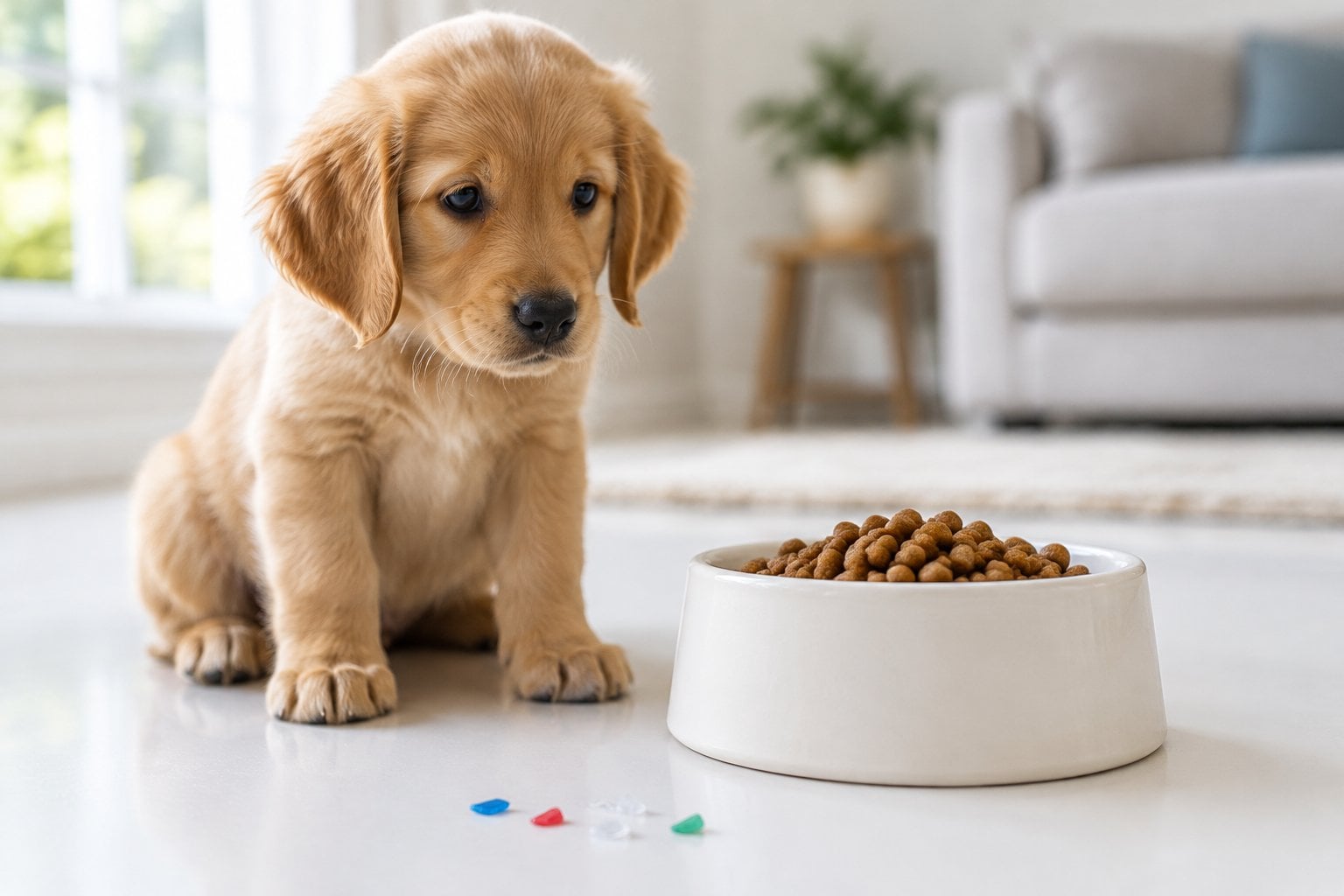
In the fall of 2009, Nutro recalled certain bags of its puppy food after pieces of melted plastic were found on the production line. The cause, according to reports at the time, was a worker’s plastic hard hat that got into the equipment.
The recall covered Nutro Ultra Puppy in 4.5- and 30-pound bags, plus a 5-pound Nutro Natural Choice Small Bites Puppy formula, sold at some PetSmart and Petco stores in western states. Nutro said only three products reached stores, and that the finished food probably didn’t contain any plastic.
This is the mildest recall on our list, but it shows that problems in a pet food plant don’t have to be chemical. Hard plastic can cause choking or injure the gut, which is why companies recall even when the risk looks small. Nutro is also one of the 16 brands the FDA named in its 2019 heart disease reports.
12. Acana Puppy Recipe
In June 2019, the FDA published the brand names that came up most often in reports of dilated cardiomyopathy, or DCM, a disease where the heart muscle weakens and the heart gets bigger. Acana topped the list, named in 67 reports.
The FDA found that more than 90% of the foods in the reports were grain-free, and 93% contained peas and/or lentils. Acana’s Puppy Recipe is built that way. Retail ingredient lists show it uses lentils, peas and chickpeas instead of grain.
To be fair, the FDA has never proven that these foods cause DCM. In 2022 it said the reports alone don’t show cause and effect, and that it would update the public only when there’s meaningful new science. Acana’s maker, Champion Petfoods, objected to the FDA naming brands. But if you’d rather avoid the question, many vets suggest a puppy food with grains. The FDA’s DCM page has the full background.
13. Taste of the Wild High Prairie Puppy
Taste of the Wild was the third most-named brand on the FDA’s 2019 list, with 53 reports of DCM. Its High Prairie Puppy recipe is grain-free, and retail ingredient lists put pea protein and peas right behind buffalo, lamb meal, sweet potatoes and egg product.
Taste of the Wild is made by Diamond Pet Foods, and it was also one of the brands caught up in Diamond’s 2012 Salmonella recall at the Gaston, South Carolina plant.
The brand has plenty of fans, and many dogs eat it with no trouble at all. Taste of the Wild has since added recipes made with grain. But High Prairie Puppy fits the profile that worried vets and FDA scientists: grain-free, with legumes high on the ingredient list. If you feed it, keep up with regular checkups and ask your vet to listen closely to your dog’s heart at every visit.
14. 4health Grain Free Puppy
4health is Tractor Supply’s store brand, and it was named in 32 DCM reports on the FDA’s 2019 list, tied for fourth.
The 4health Grain Free Puppy Chicken Formula fits the pattern the FDA found in most reported cases. On Tractor Supply’s own product page, the first five ingredients are chicken, chicken meal, garbanzo beans, peas and pea flour. That’s three legume ingredients in the top five.
The recipe also lists added taurine, an amino acid that matters for heart health. That’s good to see, but the FDA hasn’t said that adding taurine settles the question.
The low price is a big part of 4health’s appeal, especially for owners of big puppies who go through food fast. If you like the brand, it also sells a puppy formula with grain, which is the more cautious choice while the science is still unsettled.
15. Blue Buffalo Wilderness Puppy (Grain-Free)
Blue Buffalo was named in 31 DCM reports on the FDA’s 2019 list. Its Wilderness line is the brand’s high-protein range, and the grain-free Wilderness Puppy chicken recipe lists peas and pea protein along with potatoes.
Blue Buffalo built its name on advertising that its foods had no chicken by-products. In 2014, Purina sued over those claims, and Blue Buffalo later admitted in court that some of its foods had contained poultry by-product meal, which it blamed on a supplier that mislabeled the ingredient.
None of that makes the food dangerous. But for a growing puppy, a grain-free, pea-heavy recipe at a premium price is hard to justify when the brand also sells Wilderness puppy food made with grains like oats, barley and brown rice. Ask your vet which version fits your puppy best.
16. Kirkland Signature Nature’s Domain Puppy Chicken & Pea
Costco’s Kirkland Signature Nature’s Domain line was named in 29 DCM reports on the FDA’s 2019 list. The puppy version doesn’t hide what’s in it: it’s sold as Nature’s Domain Puppy Formula Chicken & Pea, a grain-free recipe, and reviews of the line say peas, lentils and sweet potatoes take the place of grain.
There is some good news on the label. Costco’s listing says the food meets AAFCO’s nutrient profiles for all life stages, including growth of large size dogs, and it adds DHA from salmon oil for brain and eye development.
Its value is a big reason it’s popular with Costco shoppers. But for a growing puppy whose heart has many years of work ahead, the grain-free, pea-based recipe is the reason it lands on this list. If you buy it, ask your vet whether it’s a good fit for your puppy’s breed.
17. Merrick Grain Free Puppy
Merrick, a Texas brand that Purina bought in 2015, was named in 16 DCM reports on the FDA’s 2019 list. Its Grain Free Puppy Real Chicken & Sweet Potato recipe puts peas right after deboned chicken and chicken meal, followed by sweet potatoes and potatoes.
That ingredient order is the profile the FDA flagged. In the reports it reviewed, 93% of the foods contained peas or lentils, and 42% contained potatoes or sweet potatoes.
Merrick has a reputation for putting real meat first, and that part of the label is true here. But the meat at the top doesn’t change what the rest of the recipe is made of. Merrick also sells Classic puppy recipes made with grains, and for most puppies that’s the safer pick from the same brand.
18. Orijen Puppy
Orijen, made by the same company as Acana, was named in 12 DCM reports on the FDA’s 2019 list. It’s one of the priciest puppy foods in pet stores, and retailers describe it as about 85% meat, fish and eggs.
The rest of the recipe is where the concern comes in. Ingredient lists for the grain-free Orijen Puppy show red lentils, green and yellow peas, chickpeas and beans. In other words, nearly all of the plant part of the food is legumes.
Champion Petfoods objected to the FDA naming brands, and the FDA has never said these foods cause DCM. Orijen also makes puppy recipes with grains like oats, which avoids the question. And if your puppy is a breed already prone to DCM, such as a Doberman or Great Dane, talk to your vet before choosing any grain-free food.
19. Purina Puppy Chow Complete
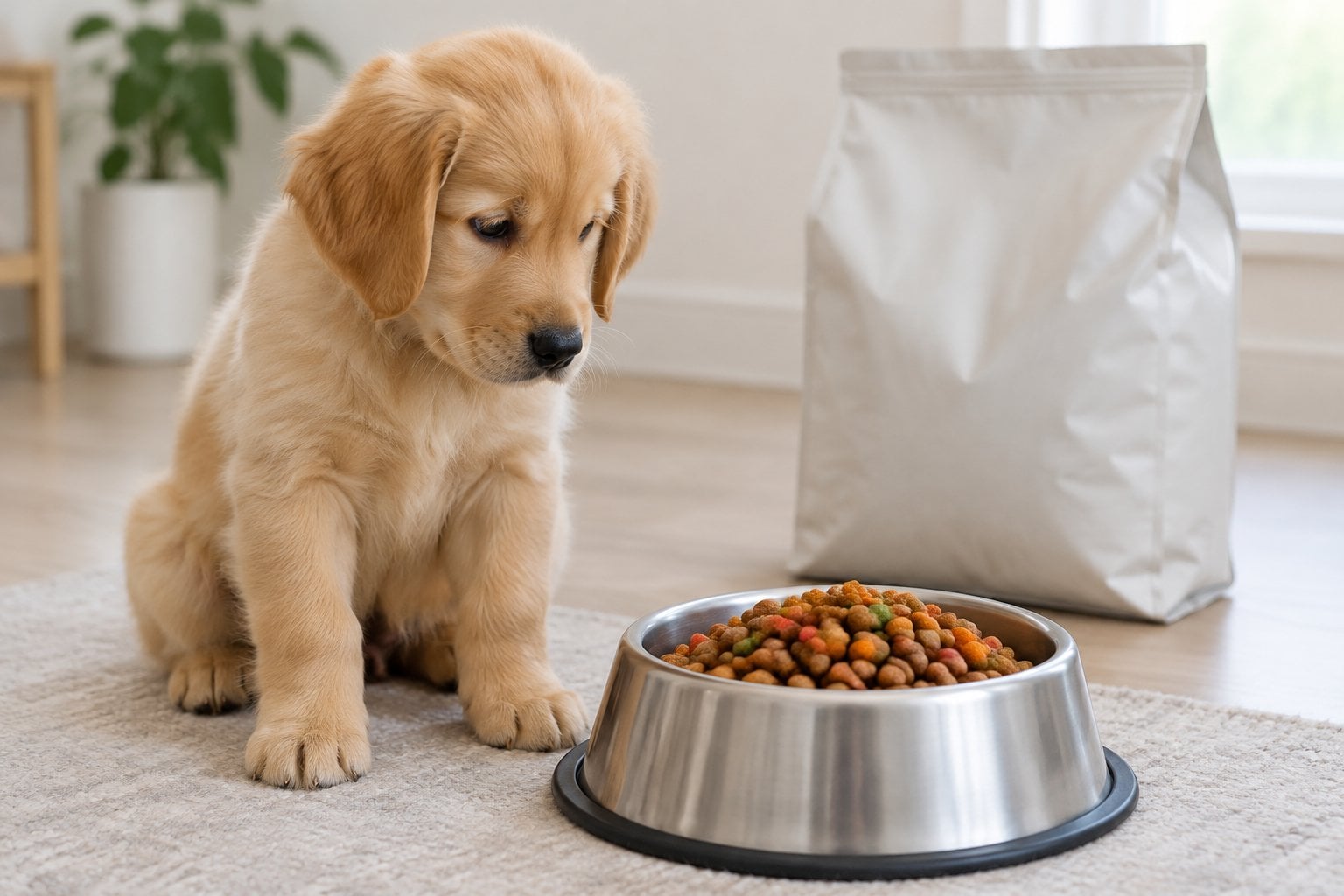
Puppy Chow is one of the best-known puppy foods in America, and it’s cheap and easy to find in any grocery store. The problem is at the end of the ingredient list. Purina’s own label lists four artificial colors: Yellow 6, Yellow 5, Red 40 and Blue 2.
These dyes are approved by the FDA, and the amounts are small. But they do nothing for your puppy. Dogs see fewer colors than people do, and they choose food by smell, so the colors are there for the people buying the bag. The FDA has also been pushing food companies to phase out petroleum-based dyes in human food.
Even Purina doesn’t think the dyes are needed: its Beneful Healthy Puppy says it uses added colors only from natural sources. A puppy’s food doesn’t need to look like a bag of candy, and plenty of budget foods skip the dyes completely.
20. Pedigree Puppy Growth & Protection
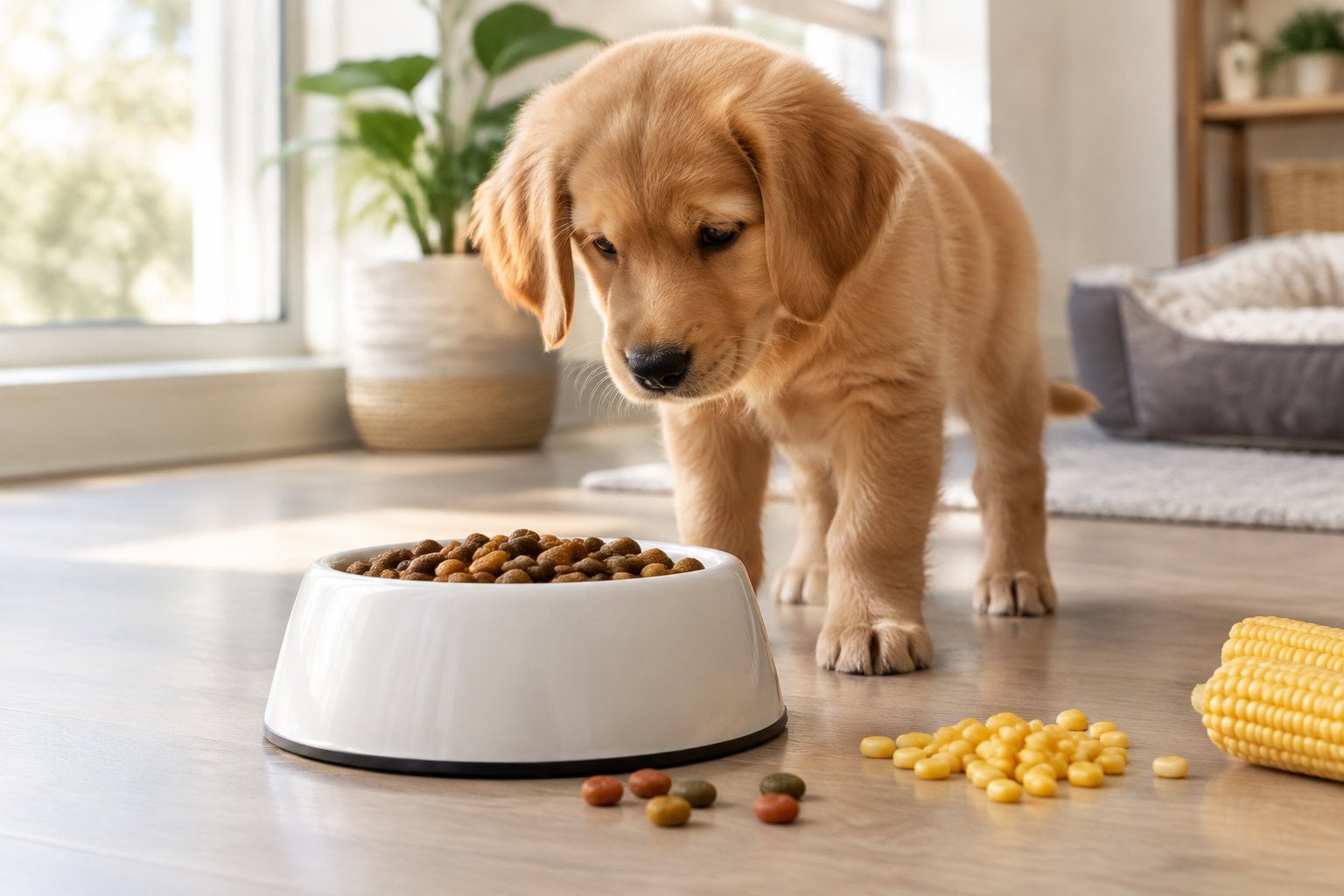
Pedigree is one of the biggest names in grocery-store dog food, and its Growth & Protection puppy kibble is easy to find almost anywhere. Retail ingredient lists start with ground whole grain corn, then chicken by-product meal, ground whole grain wheat, soybean meal and brewers rice, with meat and bone meal further down. Near the end come four artificial colors: Red 40, Yellow 5, Yellow 6 and Blue 2.
Corn and by-products aren’t poison, and plenty of puppies grow up fine on cheap kibble. But the first ingredient is a grain, the main animal protein is a by-product meal, and “meat and bone meal” doesn’t even tell you which animal it came from. Add colors that are only there to please people, and that’s a lot of filler for a growing puppy.
On a tight budget, compare labels: many low-priced puppy foods list a named meat first and skip the dyes. Our list of the worst dog foods covers more labels to watch for.