The 30 Rarest Dog Breeds in the World
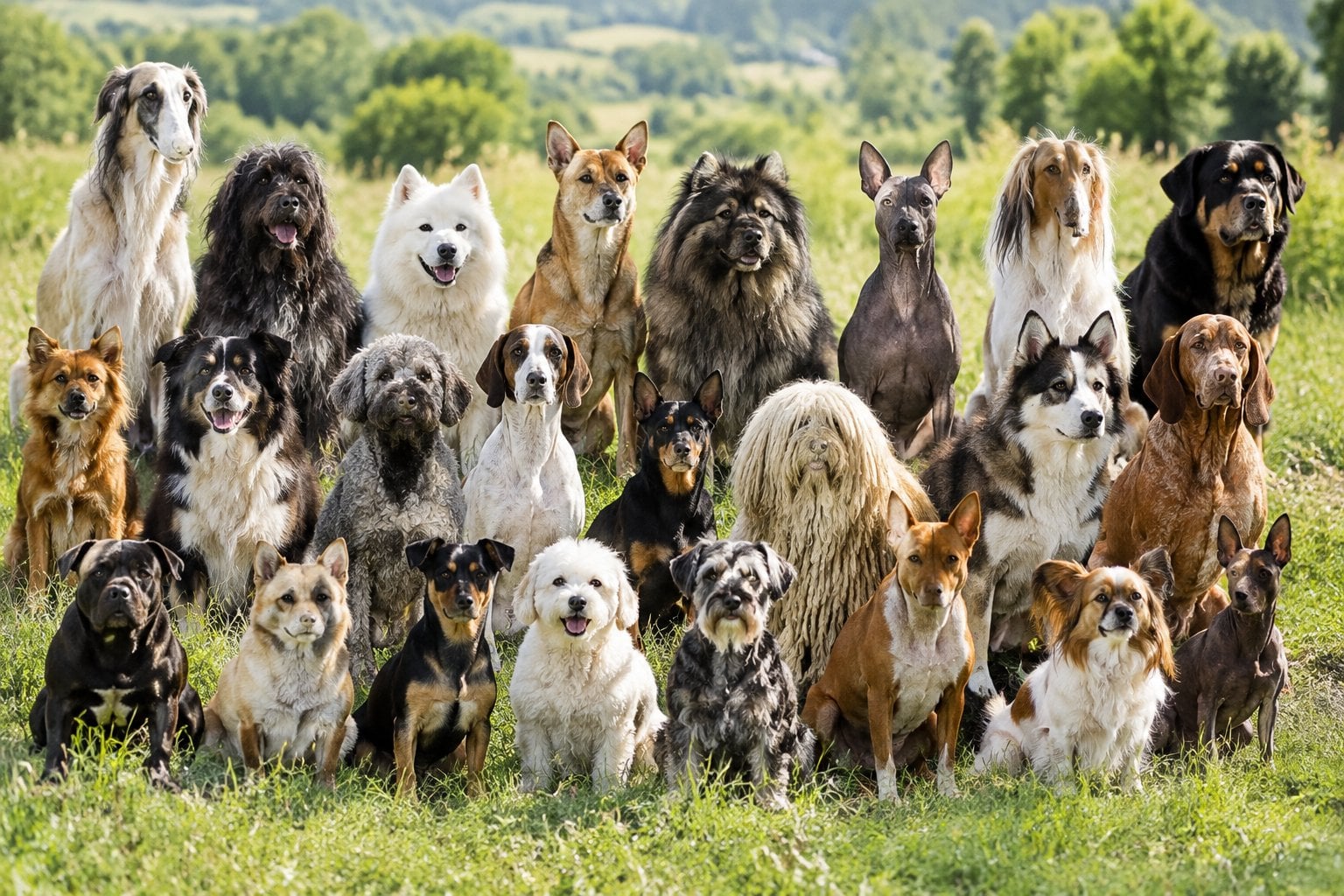
The American Kennel Club ranks 202 breeds in its yearly popularity list, and the FCI, the world kennel federation, recognizes more than 350. Most people know the popular ones, like the Labrador Retriever or the German Shepherd. Many others survive in tiny numbers, kept going by a few dedicated breeders.
The rarest dog breeds have very small populations, often limited to one region, a narrow breeding community, or a working role that has faded over time. Some, like the Azawakh, still do the jobs they were developed for. Others nearly vanished and were rebuilt from a handful of dogs. Here are 30 of them, with where they come from, how rare they really are, and which kennel clubs recognize them.
1. New Guinea Singing Dog
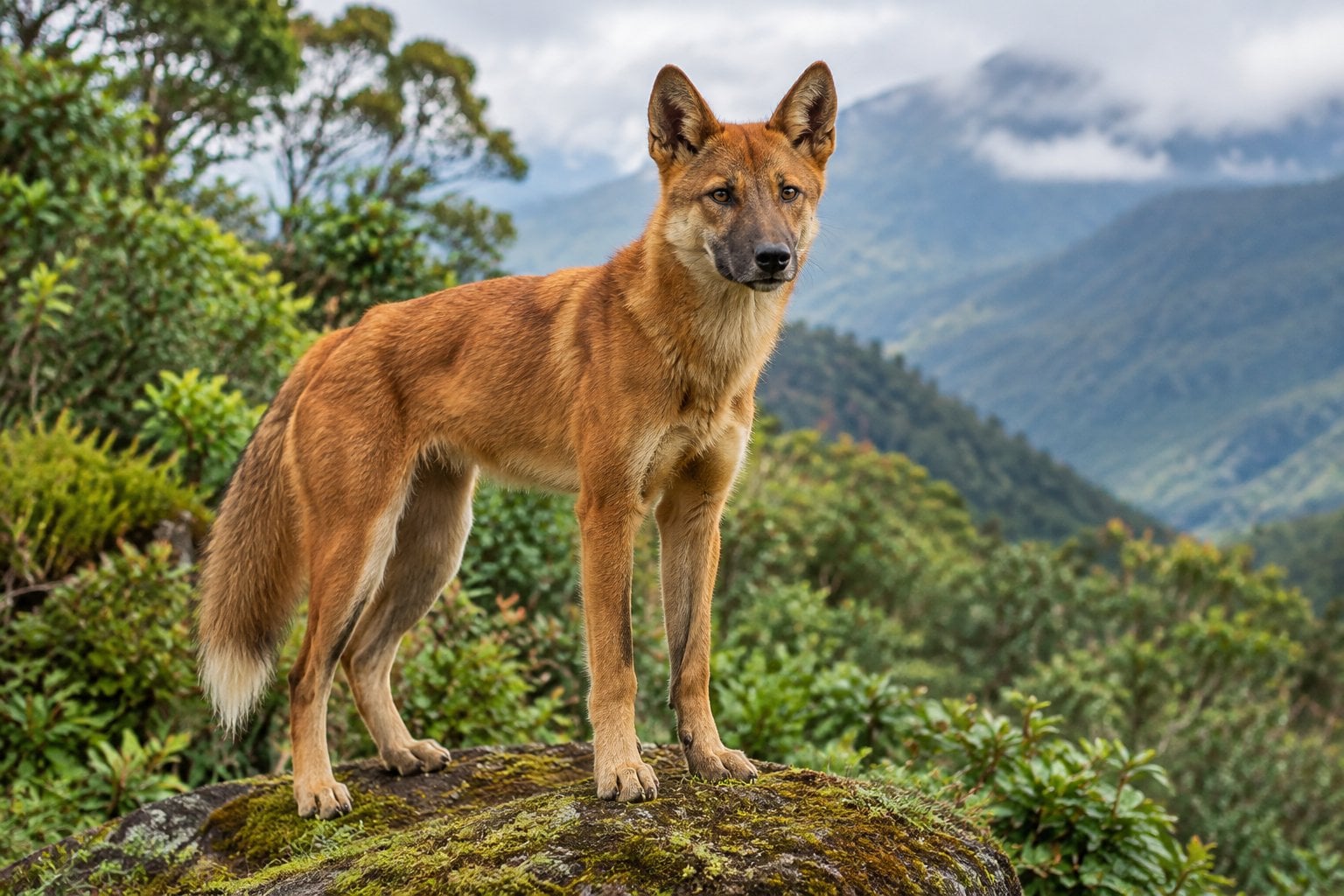
The New Guinea Singing Dog comes from the island of New Guinea, where it lived in the highland regions. It is named for its unusual howl, which rises sharply in pitch and often sounds like singing. If you hear one, you will notice the difference from a typical bark.
Its ancestry is debated. Genetic research suggests it belongs to an ancient dog lineage related to the Australian dingo, and it was once treated as a separate species.
For decades, many thought the wild dogs had disappeared. Then a 2020 genetic study, reported by the National Human Genome Research Institute, found that the Highland Wild Dogs living in New Guinea’s mountains are the original wild population. Outside New Guinea, only about 200 to 300 live in captivity, and all of them descend from just eight founding dogs.
No major kennel club recognizes it today: it is not part of the AKC, FCI or UKC registries. It is small and agile, with a fox-like face, and it is known for being unusually flexible and a good climber. You would need experience and very secure fencing to keep one.
2. Otterhound
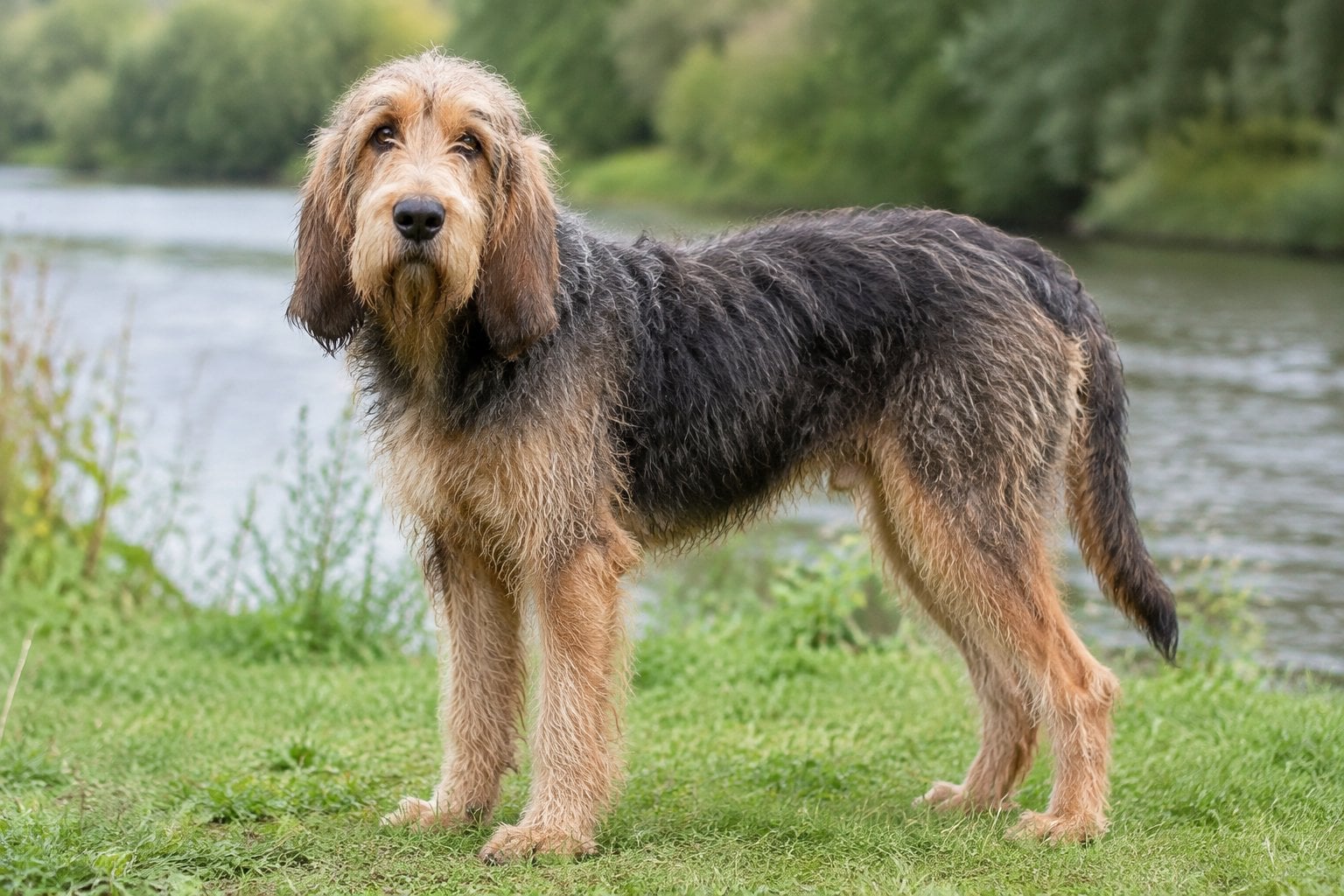
The Otterhound is a large scent hound from England, where it was developed to hunt river otters. Its roots go back to medieval England, and the breed was kept by hunting packs that followed otters along waterways.
You can recognize it by its rough, oily double coat, webbed feet, and long, drooping ears. These features suit a dog built to swim and track scent through water and mud.
The breed’s numbers fell sharply after otter hunting was banned in England in 1978. The UK’s Royal Kennel Club lists the Otterhound as a Vulnerable Native Breed, and only 10 puppies were registered there in 2025. The Otterhound Club of America puts the worldwide population at fewer than 800 dogs.
The American Kennel Club recognized the breed in 1909 and ranked it 189th of 202 breeds in 2025. It is also recognized by the United Kennel Club and the FCI.
If you meet one, expect a friendly, boisterous dog with a strong nose and plenty of stamina.
3. Skye Terrier
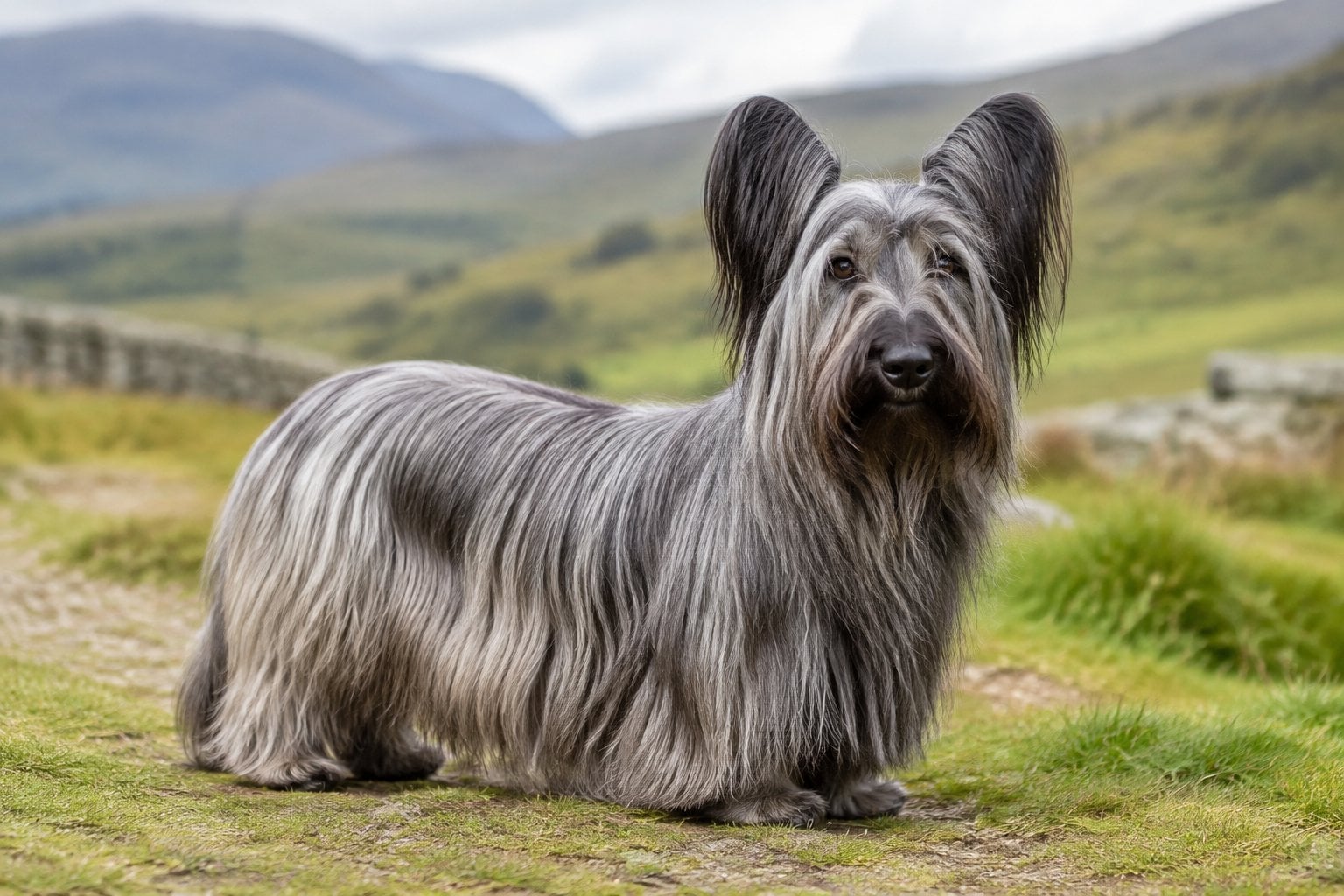
The Skye Terrier comes from the Isle of Skye in Scotland, where it was developed to hunt foxes, otters, and badgers among the rocks. If you look at one, you will notice a long, low body, short legs, and a flowing double coat that hangs to the ground. The ears can be either erect or drooping.
The breed has a long history. Records of it date back several centuries, and it was favored by some members of the nobility in the 1800s. You may know the story of Greyfriars Bobby, the Edinburgh dog that stayed by his owner’s grave for years, who is often described as a Skye Terrier.
Today the breed is rare. The UK’s Royal Kennel Club lists it as a vulnerable native breed, and only 45 Skye puppies were registered there in 2025. In the United States, the American Kennel Club ranked it 181st of 202 breeds that year. The AKC and the FCI both recognize it.
If you meet one, expect a loyal dog that is reserved with strangers.
4. Dandie Dinmont Terrier
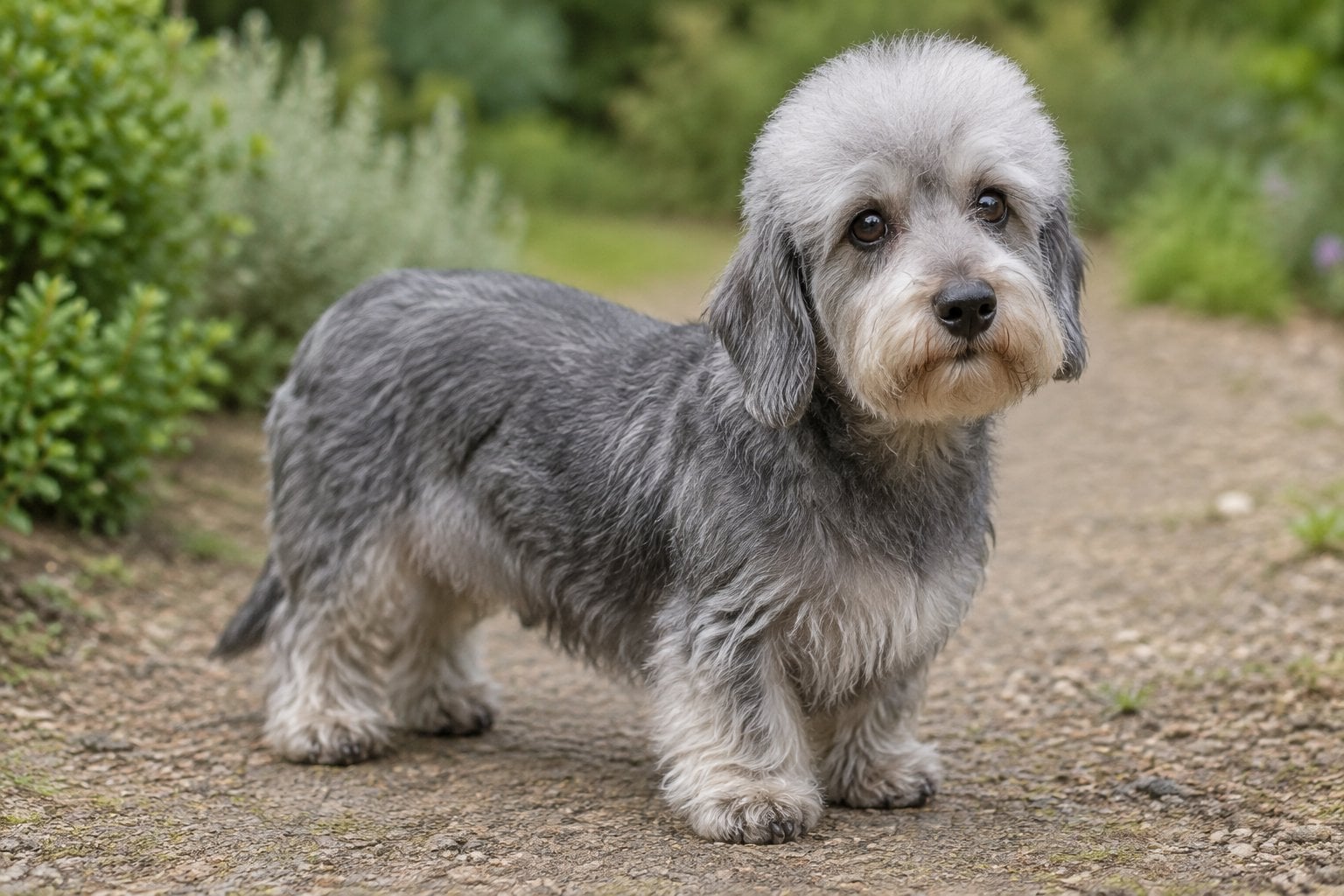
The Dandie Dinmont Terrier comes from the border country between Scotland and England. Farmers and tinkers there kept the dogs in the 1700s to hunt otters and badgers. The breed took its name from a farmer character in Sir Walter Scott’s 1815 novel Guy Mannering.
When you see one, the shape is hard to miss. The body is long, the legs are short, and a soft, silky topknot sits on the head. The coat is either pepper or mustard in color.
Few puppies are born each year. The UK’s Royal Kennel Club lists the breed as vulnerable, with just 81 puppies registered in 2024 and 88 in 2025.
The American Kennel Club recognized the breed in 1886, and it competes in the Terrier Group. The Dandie Dinmont Terrier is also recognized by the FCI and the UKC.
At home, you can expect an alert, intelligent dog that is affectionate with family and steady rather than boisterous.
5. Sealyham Terrier
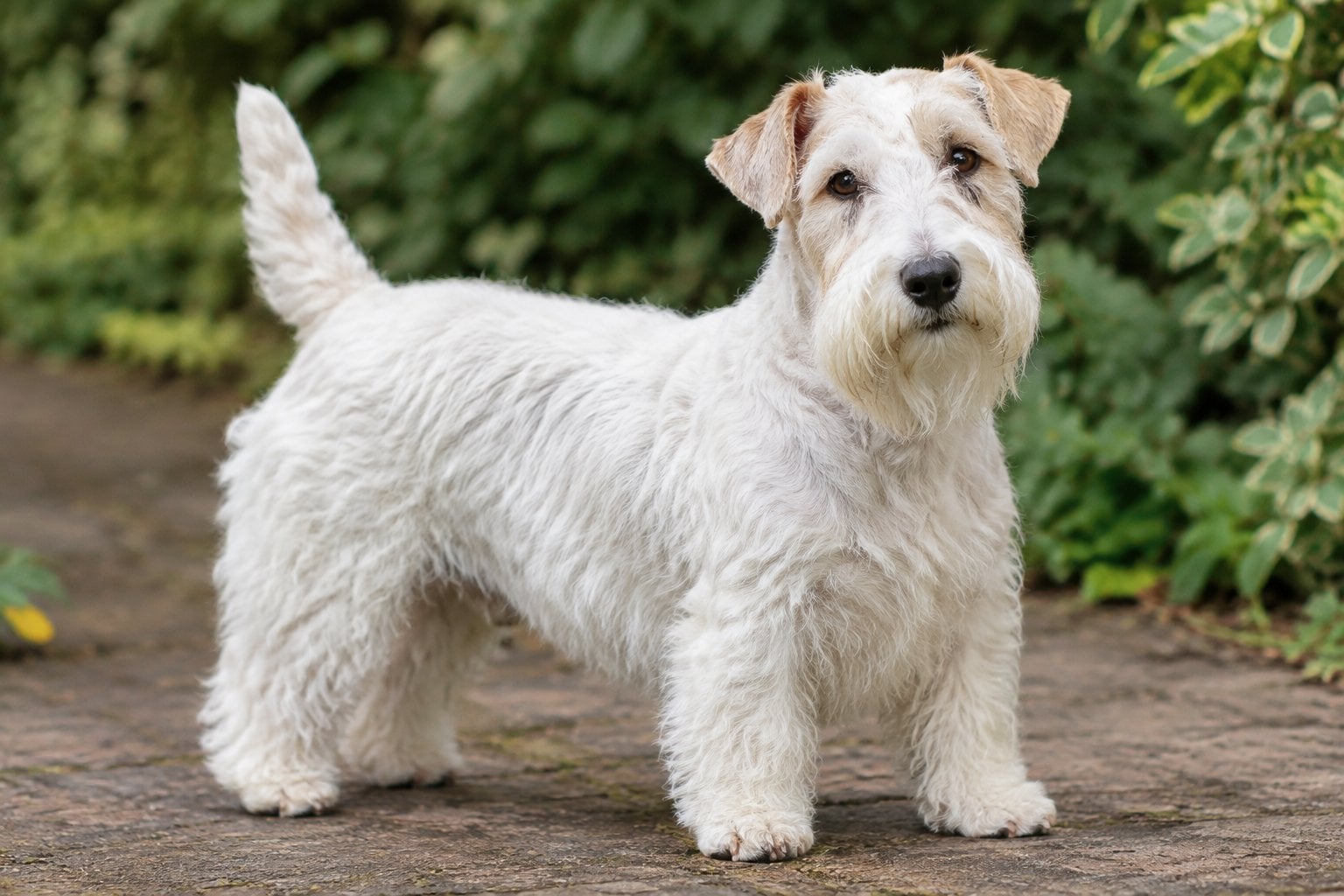
The Sealyham Terrier is a small Welsh working dog with a white, wiry coat and long facial hair. It stands about 10 to 12 inches tall, and you will notice its short legs and sturdy build right away.
Captain John Edwardes developed the breed in the mid-to-late 19th century at Sealyham House in Pembrokeshire, Wales. He wanted a fearless dog that could hunt badgers, otters, and foxes.
The Sealyham Terrier Club formed in 1908, and the American Kennel Club recognized the breed in 1911. The FCI lists it as a British breed.
After the First World War, the breed became popular with celebrities and royalty. Today you will find it far less often. The UK’s Royal Kennel Club places it on its Vulnerable Native Breeds list, with 111 puppies registered in 2025, and it remains one of the rarer terriers in the AKC registry.
If you take one on, expect a spirited, intelligent companion with a stubborn streak, so consistent, positive training works best.
6. Glen of Imaal Terrier
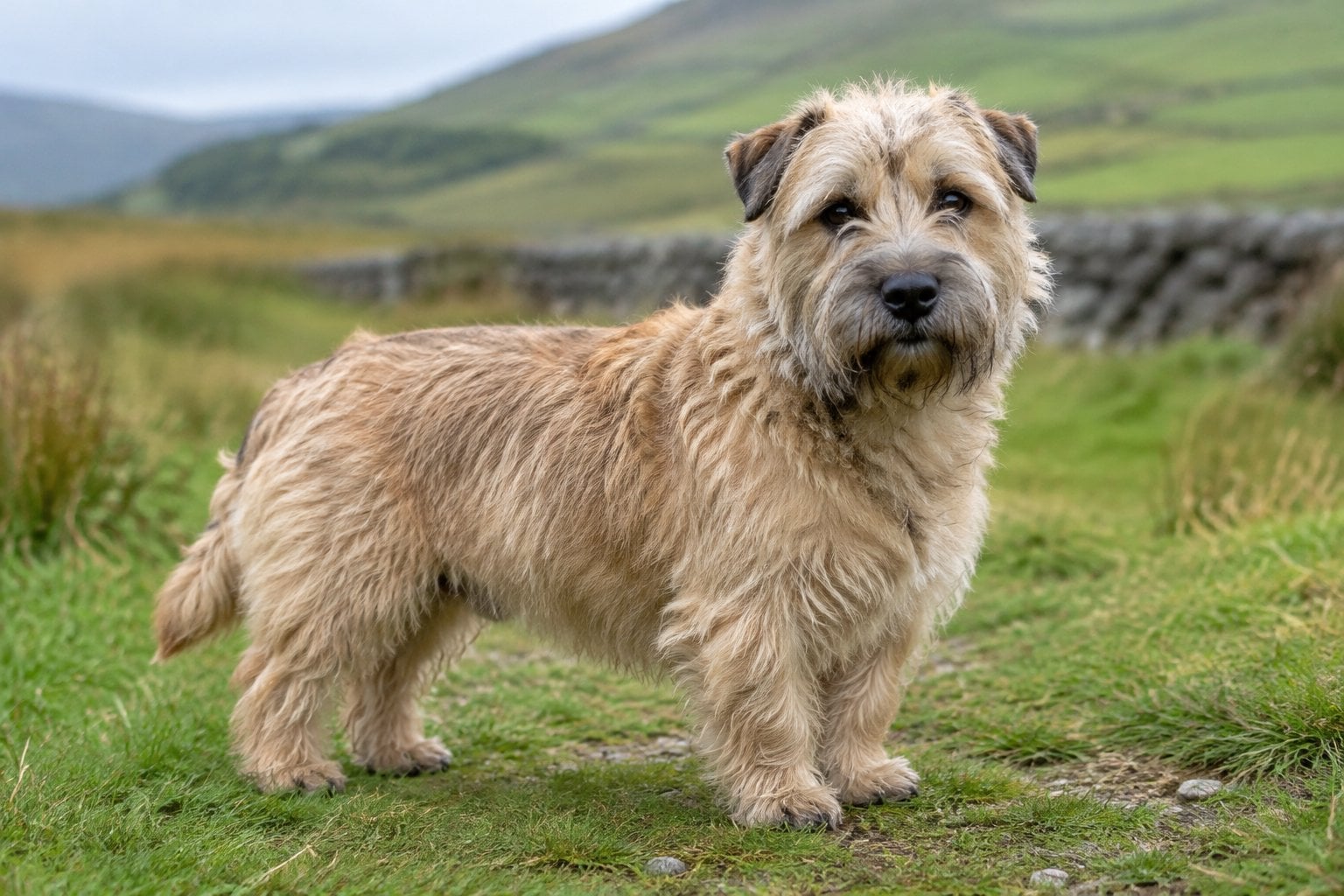
The Glen of Imaal Terrier comes from the Glen of Imaal, a remote valley in County Wicklow, Ireland. Local farmers bred these dogs to hunt foxes and badgers and to control vermin. They were also used as turnspit dogs, though that role is often retold with some embellishment.
If you meet one, you will notice a low, sturdy build with a long body and short legs. Adults stand no more than 14 inches at the shoulder. The wiry double coat is usually wheaten, blue, or brindle.
You will find that the breed is calmer and less excitable than many other terriers. It is still determined and can be stubborn when it comes to training.
The Irish Kennel Club recognized the breed in the 1930s. The AKC fully recognized it in 2004, and it is also recognized by the FCI and the UKC.
Registrations remain low. The AKC ranked it 165th of 202 breeds in 2025, and the UK’s Royal Kennel Club lists it as a vulnerable native breed, with 61 puppies registered that year.
7. Sussex Spaniel
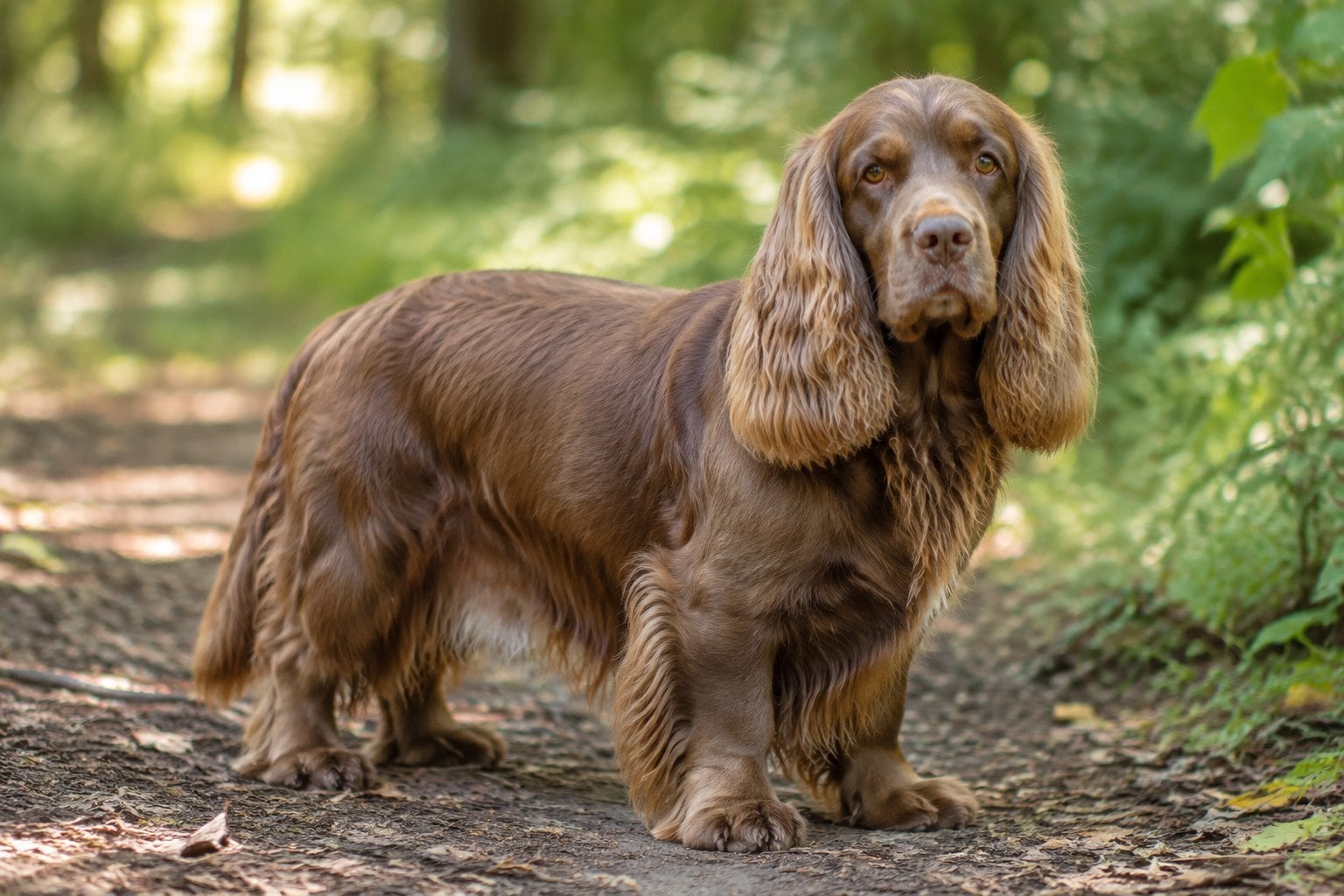
The Sussex Spaniel comes from the county of Sussex in southern England. It was developed in the late 18th century, with breeding tied to an estate near Hastings, to work in the thick, hard-to-navigate cover of the local countryside.
You will notice a low, long, heavily built dog with short legs and a rich golden-liver coat. Its slow, rolling gait sets it apart from faster-moving spaniels, and it has a calm, steady temperament.
The breed’s numbers fell sharply during the two world wars, and only a handful of dogs are believed to have survived the second one. The population recovered afterward but has stayed small. The UK’s Royal Kennel Club lists the Sussex Spaniel as a vulnerable native breed. Only 15 puppies were registered there in 2025, the fewest of any spaniel on that list, and the AKC ranked the breed 175th of 202.
You can find the breed recognized by the American Kennel Club, the United Kennel Club, and the Fédération Cynologique Internationale.
8. Field Spaniel
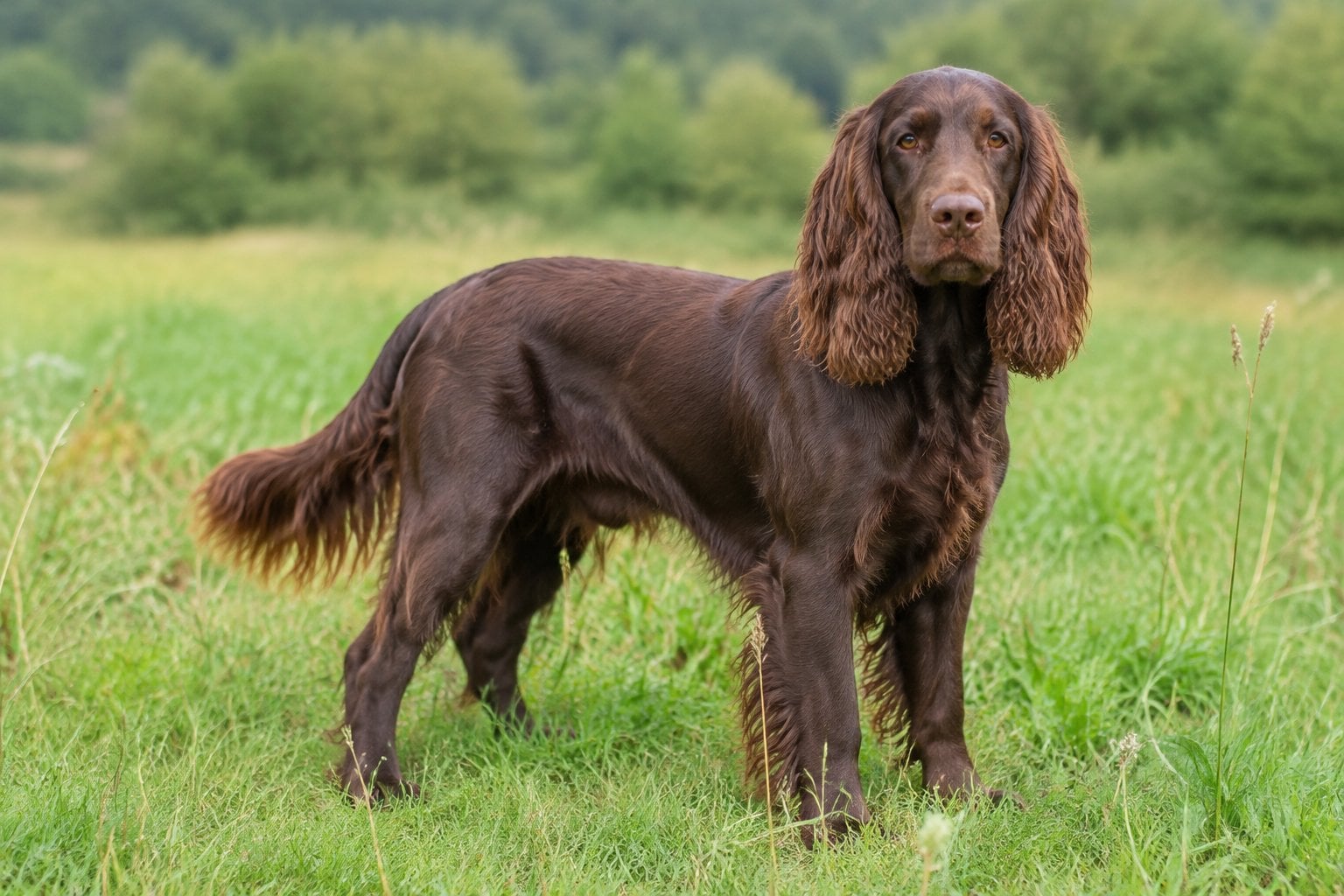
The Field Spaniel comes from England, where breeders developed it in the 19th century as a working gundog. It was meant to flush and retrieve game in rough cover, and early dogs were solid black or liver in color.
If you look at the breed’s history, you will see a cautionary tale. Late in the 1800s, show breeders favored longer backs and shorter legs, which produced heavy dogs that struggled to work in the field. Interest dropped, and the breed came close to disappearing in the 20th century.
Dedicated breeders in Britain and North America rebuilt the line by returning to a more moderate, athletic build. The breed is recognized by the American Kennel Club, the UK’s Royal Kennel Club, the FCI, and the United Kennel Club.
Today, you will find that it remains one of the least common spaniels. Only 48 Field Spaniel puppies were registered in the UK in 2025, and the AKC ranked the breed 148th of 202.
If you meet one, expect a gentle, intelligent dog that bonds closely with its family.
9. Irish Red and White Setter
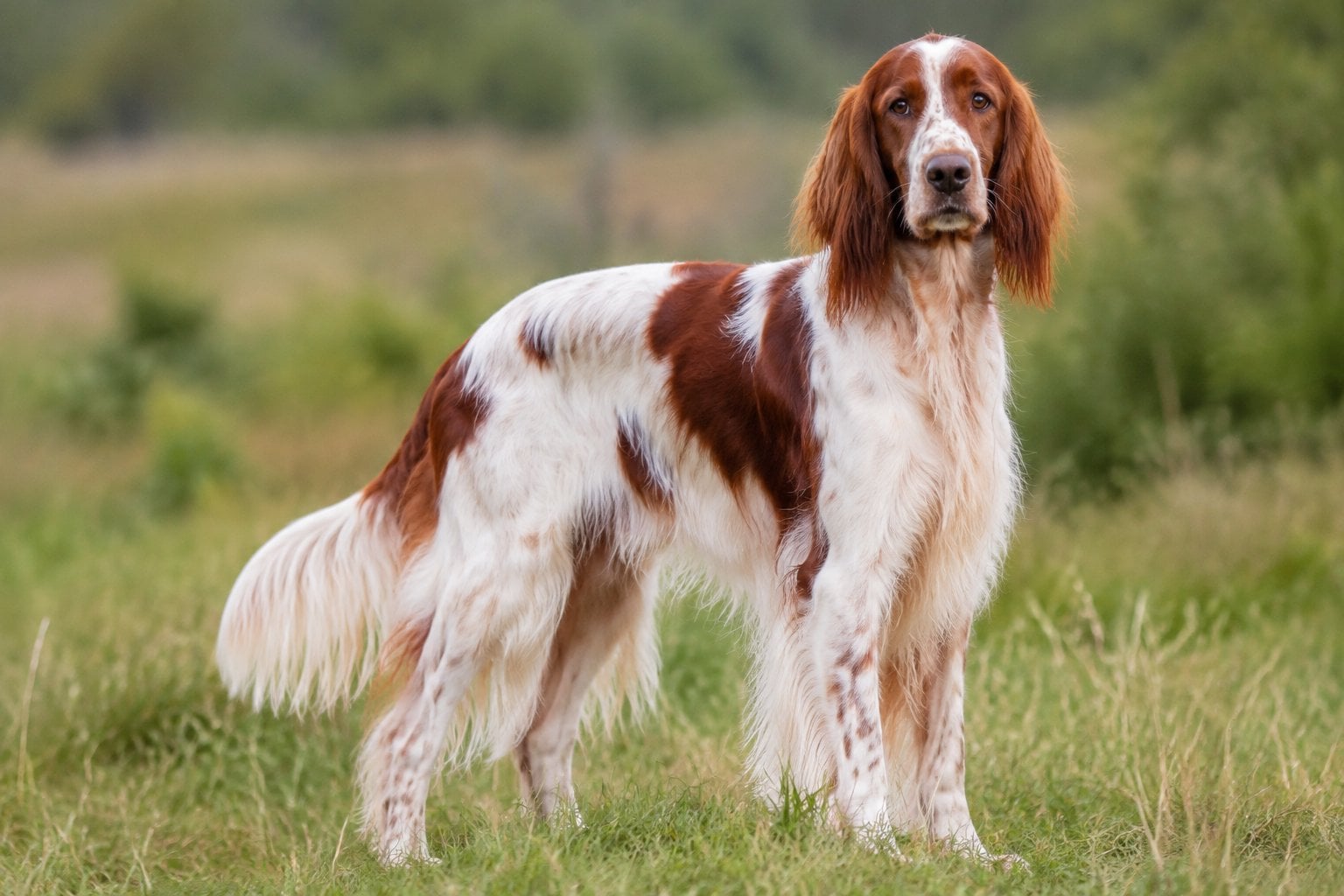
The Irish Red and White Setter is one of Ireland’s oldest gundog breeds. It was developed to locate game birds and hold still until a hunter came into range. Its white coat with red patches made it easy to see in the field, which is why many hunters preferred it to the solid red setter.
You can trace the breed back several centuries, but its numbers fell sharply as the solid red Irish Setter gained popularity. By the early 20th century, very few remained. Dedicated breeders in Ireland worked to revive the breed, and it recovered gradually through the middle of the century.
It is still uncommon today. Only 22 puppies were registered in the UK in 2025, and the breed sits on the Royal Kennel Club’s vulnerable list. The Fédération Cynologique Internationale recognizes the breed. The American Kennel Club added it to its Sporting Group in 2009.
If you choose this breed, expect an athletic, friendly dog with a strong hunting drive. It needs daily exercise and regular grooming to keep its silky coat tidy.
10. Curly-Coated Retriever
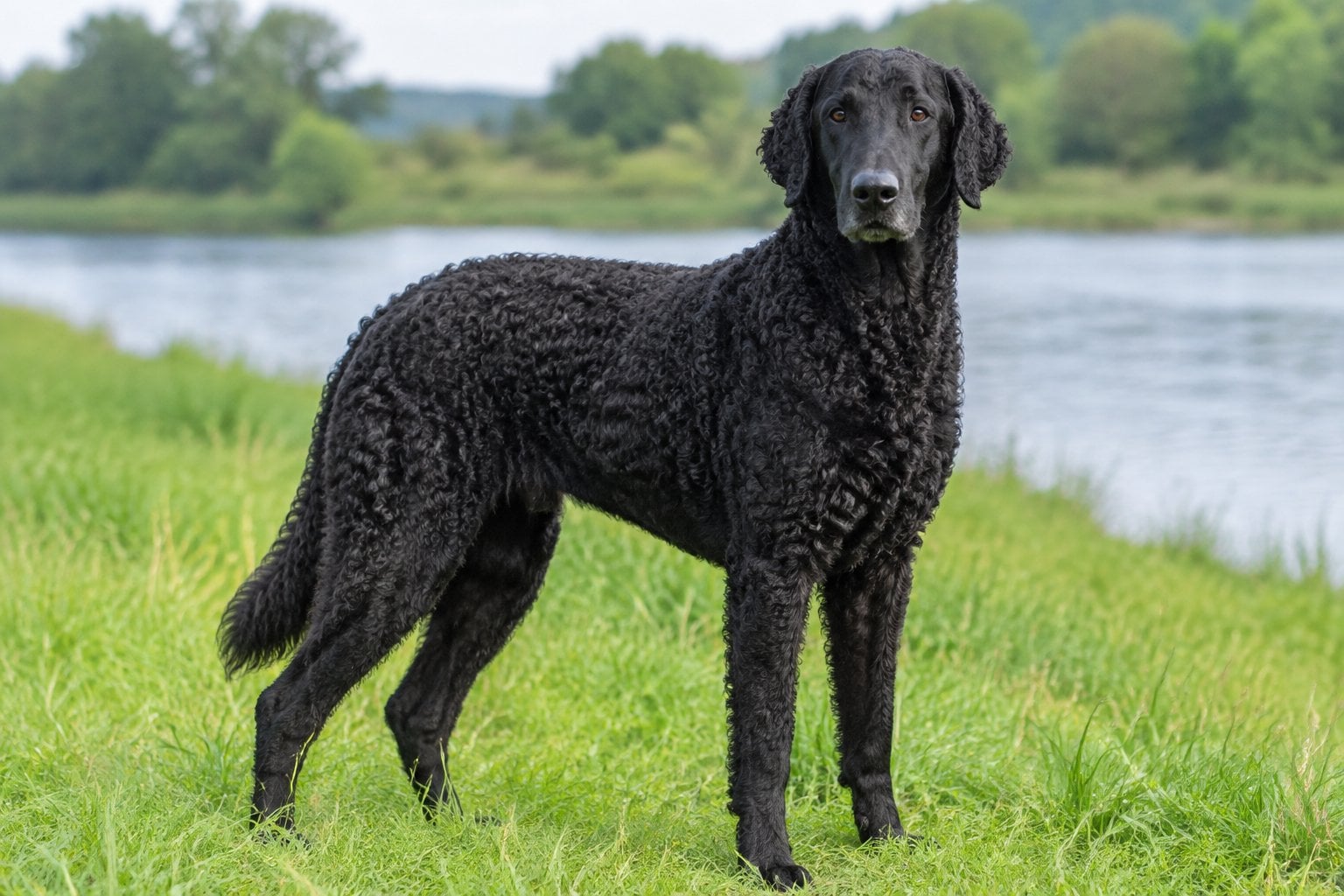
The Curly-Coated Retriever is widely regarded as one of the oldest retriever breeds. It developed in England during the 18th century, and its ancestry is thought to include the English Water Spaniel, the Irish Water Spaniel, and the now-extinct St. John’s Water Dog.
If you see one, its coat is the first thing you notice. Tight, crisp curls cover the body, leaving only the face and the front of the legs smooth. It is also the tallest of the retriever breeds.
Breeders developed the dog for retrieving waterfowl and upland game, and it was used in Britain, Australia, and New Zealand. You will find it described as intelligent, independent, and reserved with strangers. It needs regular exercise and firm, consistent training.
The AKC recognized the breed in 1924, and the UKC and the FCI recognize it too. It remains far less common than the Labrador or the Golden Retriever: the AKC ranked it 168th of 202 in 2025, and only 25 puppies were registered in the UK that year. You may need to join a breeder’s waiting list to find one.
11. Chinook
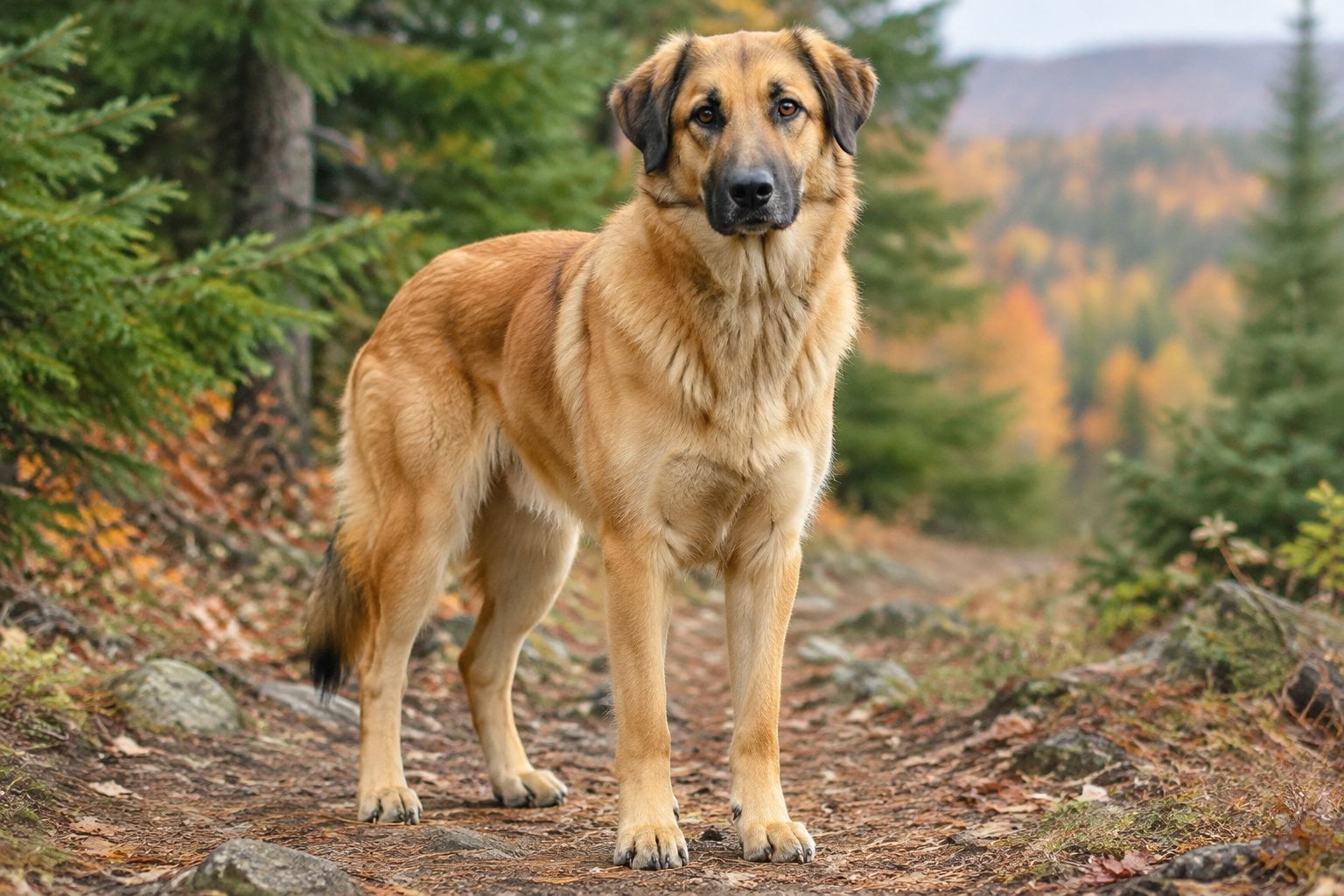
The Chinook is a sled dog developed in New Hampshire in the early 20th century. Arthur Walden, a dog driver and author, bred the first dogs of the line at his kennel in Wonalancet. He named the breed after his foundation sire, Chinook.
If you look for this breed, you will find that its numbers have dropped sharply more than once. In 1965, Guinness World Records listed it as the rarest dog breed in the world. By 1981, reports put the population at only 28 dogs, and many of them were older animals.
Dedicated breeders and the Chinook Owners Association worked to bring the breed back from near extinction. The American Kennel Club recognized the Chinook in 2013, and the United Kennel Club also registers it. It is New Hampshire’s official state dog, and it is still one of the rarest AKC breeds, ranked 198th of 202 in 2025.
You can expect a medium to large dog with a tawny coat, a calm temperament, and a strong bond with its family. Chinooks need regular exercise, and they do best with owners who enjoy active routines.
12. English Toy Terrier
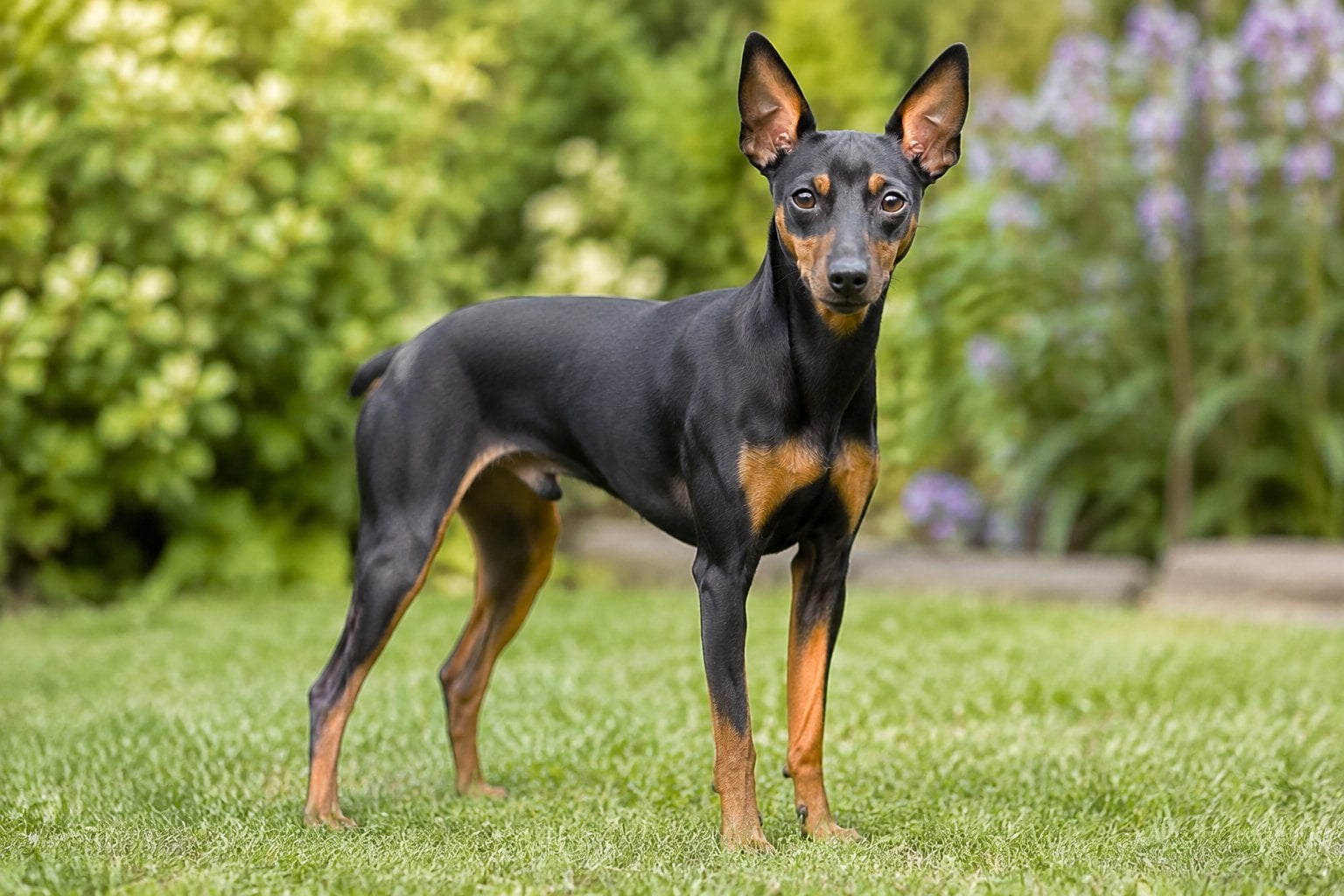
The English Toy Terrier comes from England, where it developed from the Old English Black and Tan Terrier. It is a close relative of the larger Manchester Terrier, and the two share the same sleek, black-and-tan coat.
In Victorian England, these dogs were used for rat killing, a popular sport in which terriers competed in a pit to see which could dispatch the most rats. Their speed and agility made them well suited to the task. Later, the breed became a fashionable companion, and smaller dogs were favored by owners.
Today, you will rarely see one. The UK’s Royal Kennel Club lists it as a Vulnerable Native Breed, meaning fewer than 300 puppy registrations a year. In 2025 there were just 52. The FCI recognizes it, but the American Kennel Club does not, so you will almost never see one in the United States.
If you meet one, expect an alert, lively dog with a slim build and a short, smooth coat.
13. Lancashire Heeler
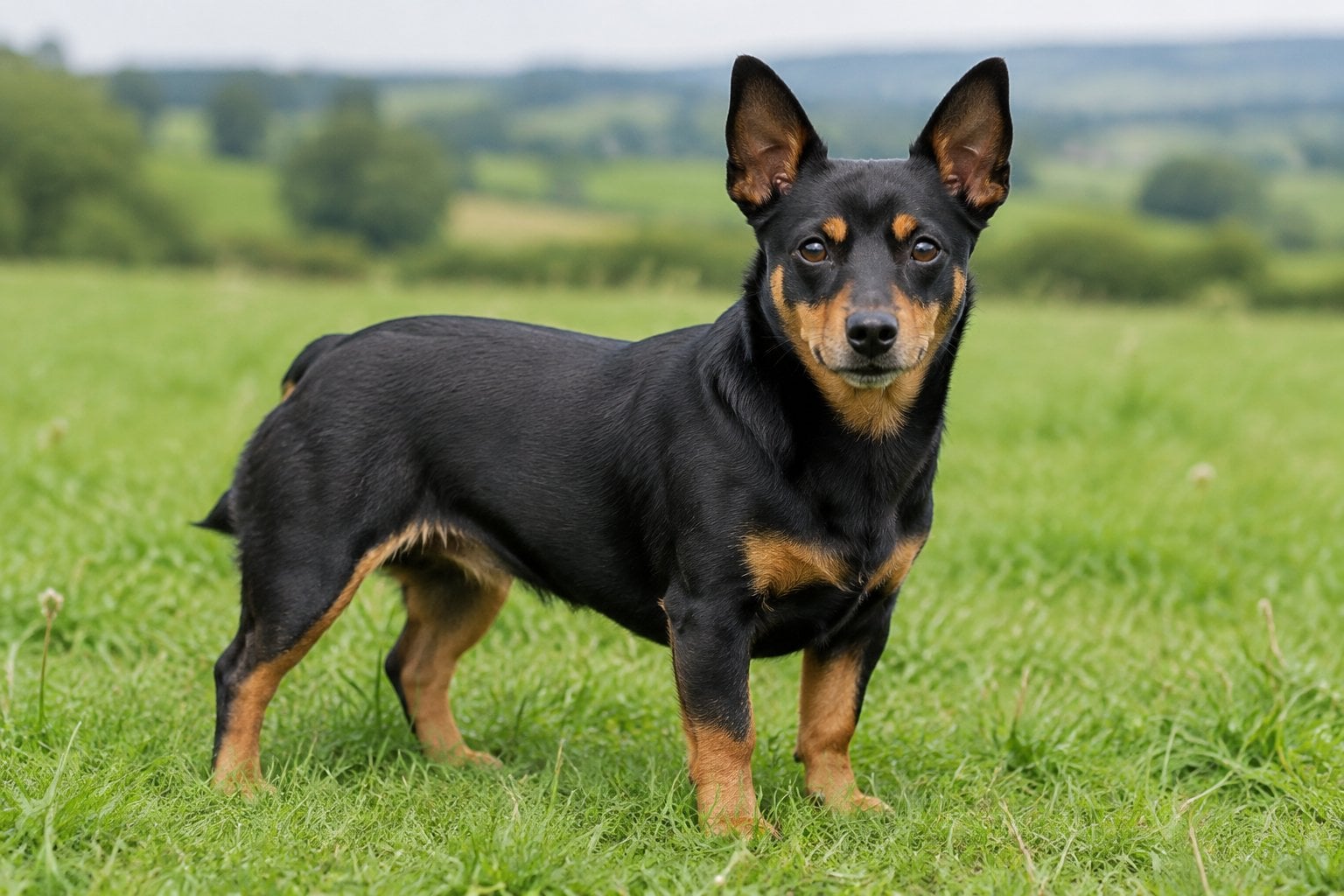
The Lancashire Heeler is a small herding terrier from northwest England, and it is sometimes called the Ormskirk Terrier. The breed is most closely tied to the area around Ormskirk in Lancashire. It is thought to descend from Welsh Corgis and Manchester Terriers, which explains its short legs and black-and-tan coat.
Farmers once used these dogs to drive cattle to market, nipping at the heels of the animals to keep them moving. If you meet one today, you will find a sturdy dog about one foot tall at the shoulder, with large upright ears and an alert expression.
The breed is genuinely rare. The UK’s Royal Kennel Club lists it as a vulnerable native breed, with 92 puppies registered in 2025. The American Kennel Club fully recognized the Lancashire Heeler in 2024, and the FCI has accepted it on a provisional basis.
Expect a cheerful, intelligent companion that does well with regular exercise and a job to do.
14. Norwegian Lundehund
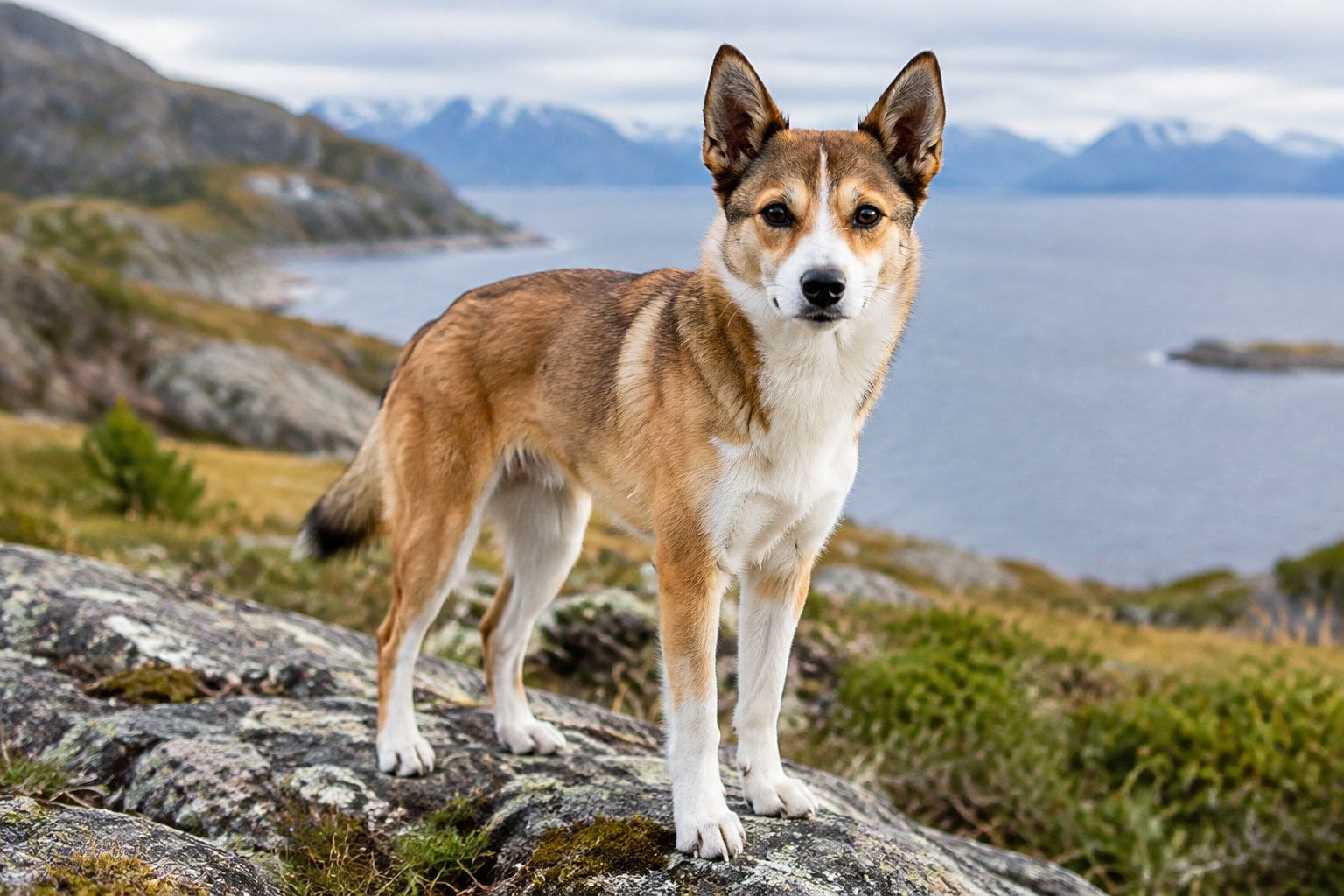
The Norwegian Lundehund is a small spitz-type dog from Norway, and its name translates to “puffin dog.” The breed developed on islands off the Norwegian coast, where people used it to hunt puffins on steep sea cliffs. The birds were collected for food and feathers.
If you look closely at a Lundehund, you will notice features found in no other breed. It has six toes on each foot, extra joints in its neck that let it tilt its head back against its spine, and unusually flexible shoulders. These traits helped it climb narrow rock ledges and crawl into nesting crevices.
The breed nearly disappeared in the 20th century, when puffin hunting declined and distemper outbreaks struck the population. According to the AKC, only six purebred dogs were left in Norway in the 1960s, and today’s Lundehunds descend from a few closely related dogs. In 2025 it ranked dead last of all 202 AKC breeds.
The American Kennel Club recognizes the Norwegian Lundehund in its Non-Sporting Group, and the Fédération Cynologique Internationale and United Kennel Club also recognize it.
15. Telomian
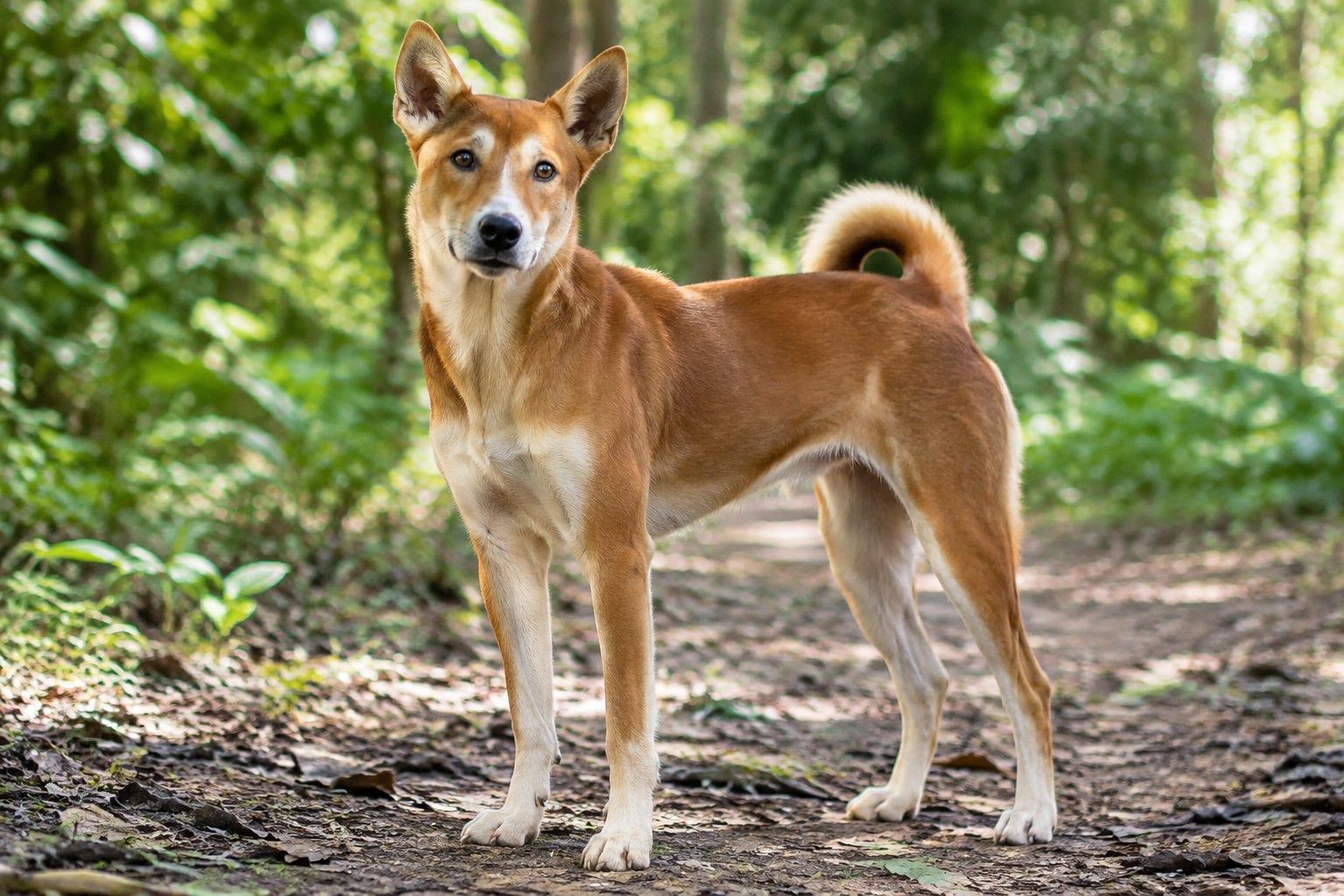
The Telomian is a primitive dog from Malaysia, and it is often described as that country’s only native breed. It takes its name from the Sungai Telom valley, where the dogs lived alongside the Orang Asli people in remote villages.
If you look at one, you will see a medium-sized dog with a short coat, usually in shades of red, tan, or brindle, with a lean and athletic frame. The breed is related to dingo-type and pariah dogs, and it has traditionally been described as a village dog that kept its own habits.
Anthropologist Orville Elliot first described these dogs in 1963, and a few were later brought to the United States. The population there stayed tiny, so the breed remains very rare outside its home region.
No major kennel club recognizes the Telomian: not the AKC, the FCI or the UKC, which makes it one of the hardest dogs on this list to find. You should expect an intelligent, energetic dog that is loyal to its family but cautious around strangers.
16. Kai Ken
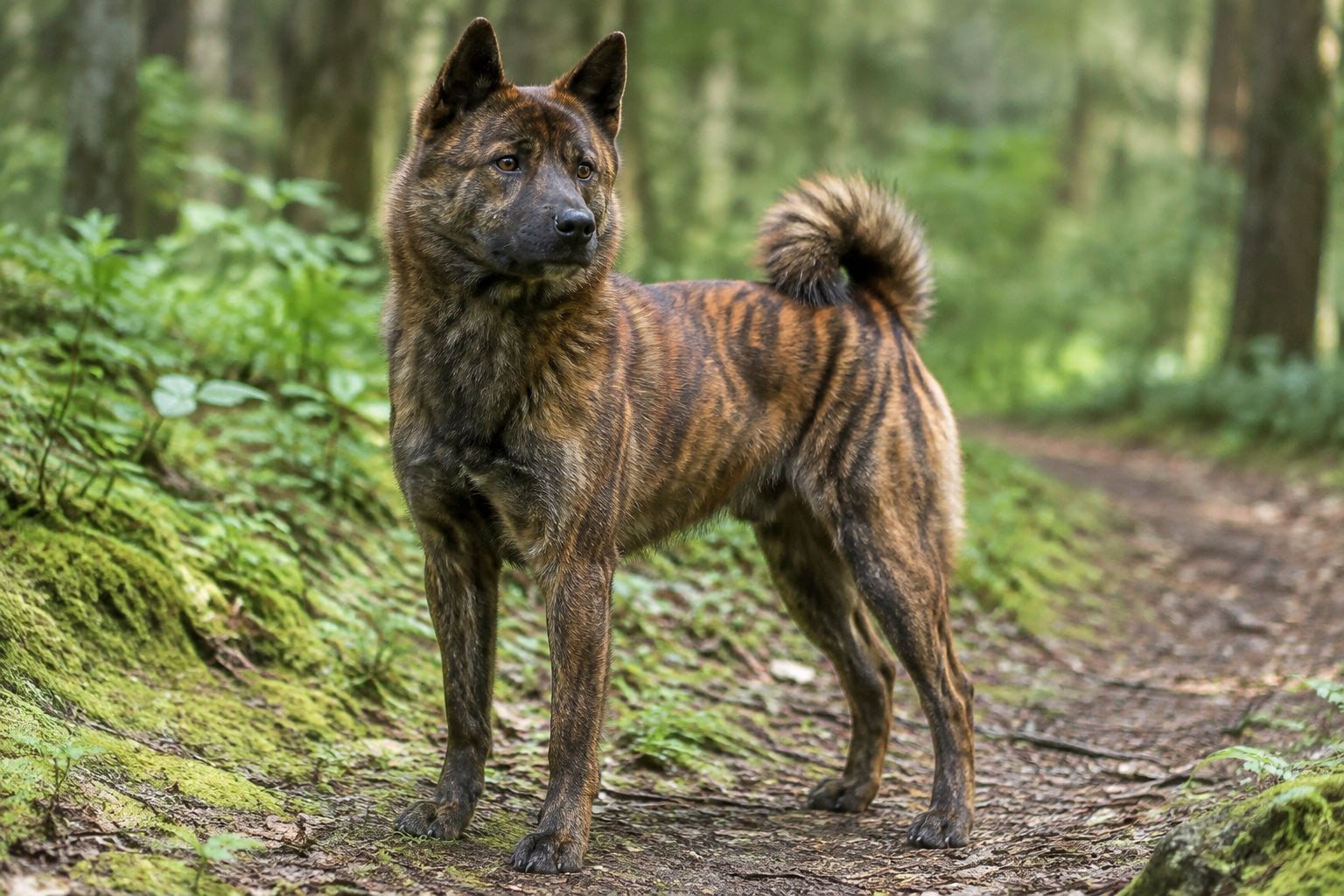
The Kai Ken comes from the mountainous Kai region of Yamanashi Prefecture in Japan, near Mount Fuji. It is one of six native Japanese breeds preserved by the Nihon Ken Hozonkai, and it was recognized in Japan in 1934.
Its isolated home helped keep the breed relatively unchanged for generations. Hunters used these dogs to track deer, boar, and other game across steep terrain, and you can still see that heritage in their agility and sure-footed climbing.
You will notice the brindle coat first, which earned the breed the nickname Tora Inu, or Tiger Dog. The Kai Ken is a medium-sized spitz type with a muscular frame, pricked ears, and a curled or sickle tail.
The breed is rare even in Japan, and outside the country you will find very few. The FCI and the UKC recognize it, and the AKC moved it into its Miscellaneous Class in 2022, the last step before full recognition. If you live with one, expect an intelligent, loyal dog that is often reserved with strangers and needs steady training, daily exercise, and early socialization.
17. Stabyhoun
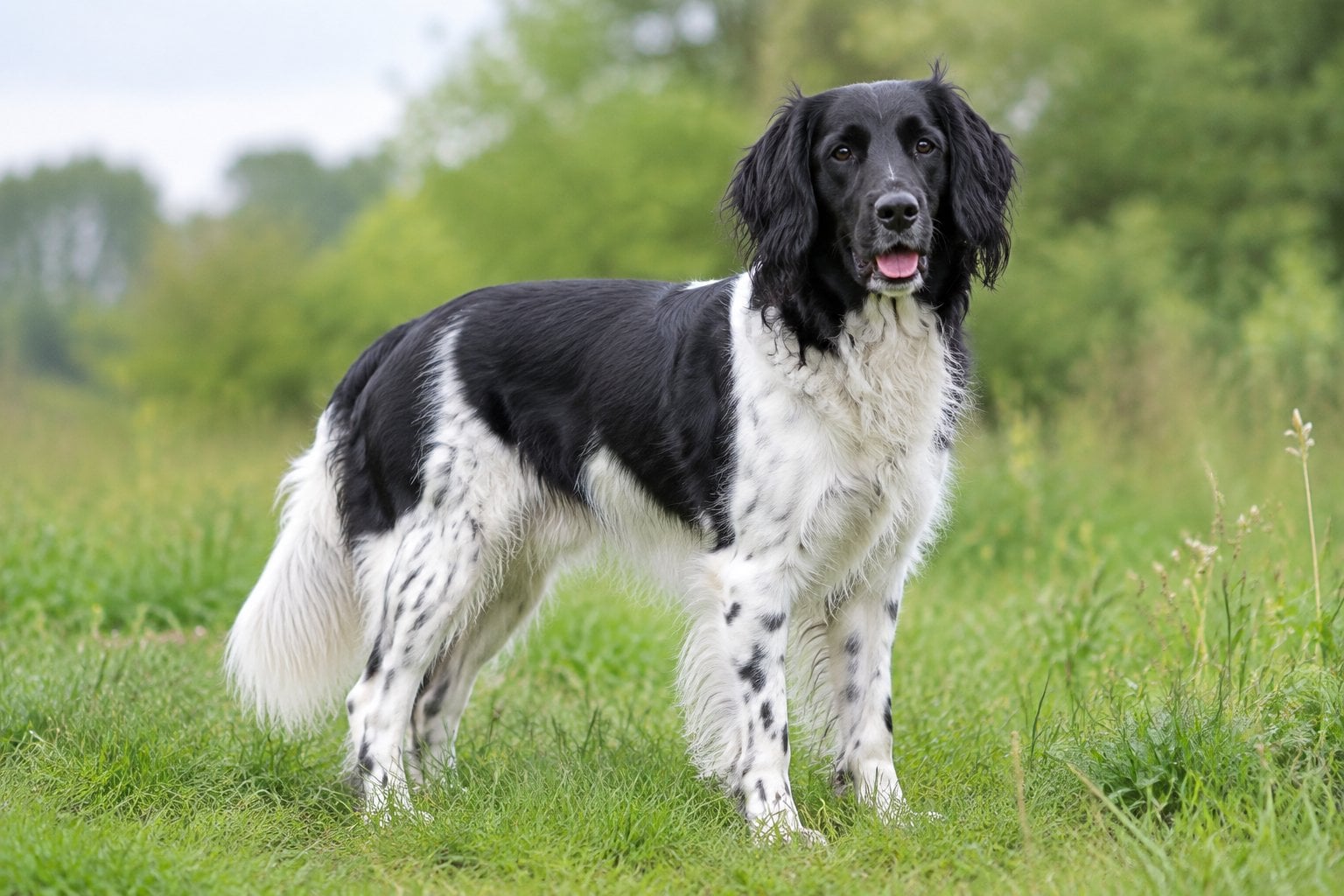
The Stabyhoun comes from the Dutch province of Friesland, where it developed in the forested eastern and southeastern parts of the region. Farmers kept these dogs as all-purpose working companions, and the name is commonly translated as “stand by me dog.” If you meet one, you will likely notice a medium-sized spaniel-type build with a feathered, mostly black and white coat, though brown and orange variants also exist.
No reliable worldwide count exists, but the breed is rarely seen outside the Netherlands. The Dutch kennel club recognized it in 1942. The FCI recognizes the Stabyhoun, and the American Kennel Club has had it in its Foundation Stock Service since 2005, a record-keeping program for breeds that are not yet fully recognized.
At home, you can expect a calm, affectionate dog that bonds closely with its family. It handles hunting, retrieving, and pointing, but it also gets along with children and other pets when socialized early. Daily exercise and regular grooming will keep it healthy and comfortable.
18. Drentsche Patrijshond
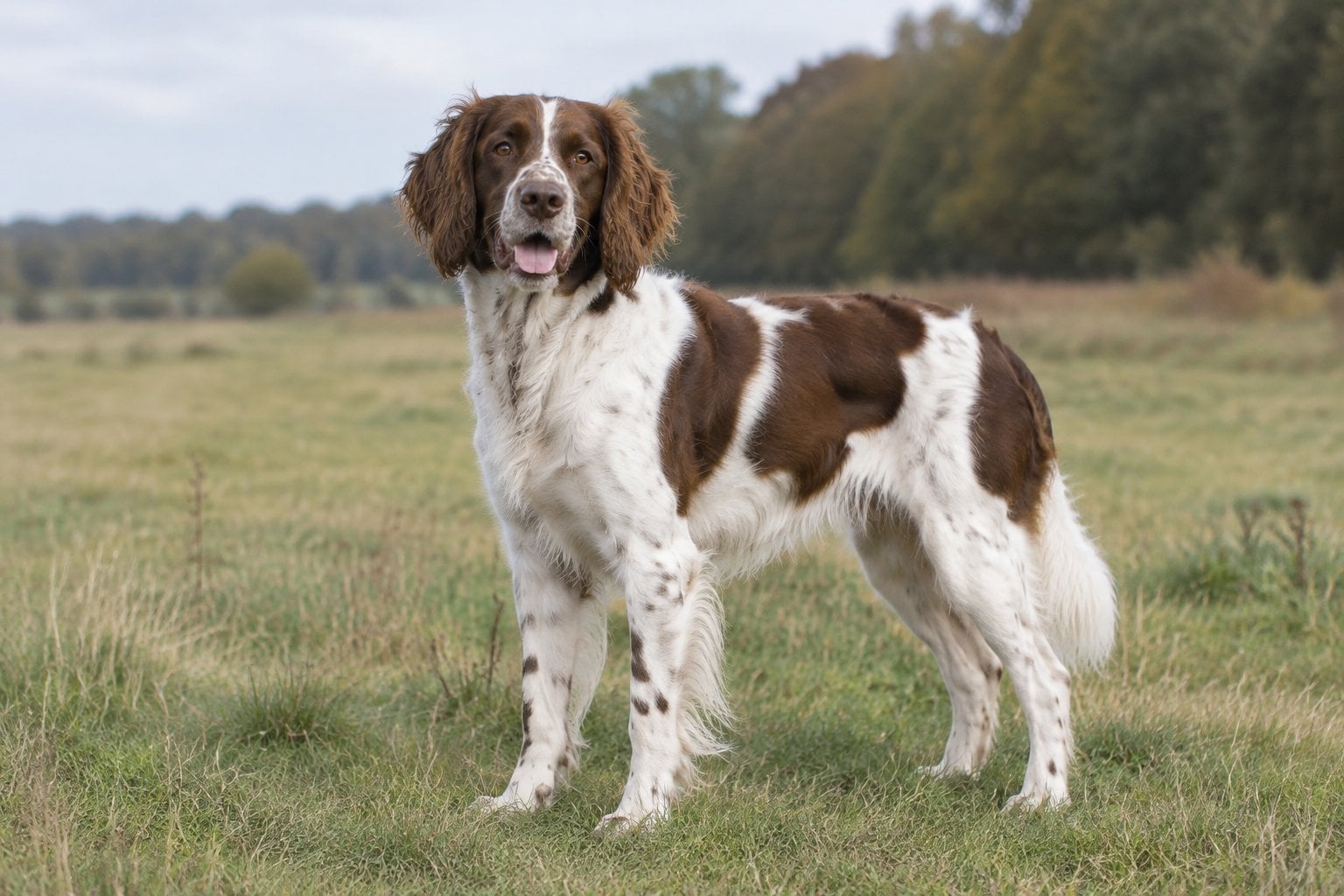
The Drentsche Patrijshond, often called the Drent or Dutch Partridge Dog, comes from the province of Drenthe in the northeastern Netherlands. If you meet one, you are looking at a breed that developed over several centuries as a landrace on small family farms.
The Drent descends from spaniel-type dogs that reached the Low Countries around the 16th century. Farmers kept them as all-purpose helpers, using them to point and retrieve game and to work around the homestead. The Dutch Kennel Club, the Raad van Beheer, recognized the breed in 1943.
Most Drents still live in the Netherlands, and numbers elsewhere remain small.
The FCI and the UKC recognize the breed, and in the United States it has been in the AKC’s Foundation Stock Service since 2010. A medium-sized dog with a feathered coat, it works at a steady pace and handles land and water retrieving. At home, you can expect a loyal, affectionate companion that thrives on activity.
19. Markiesje
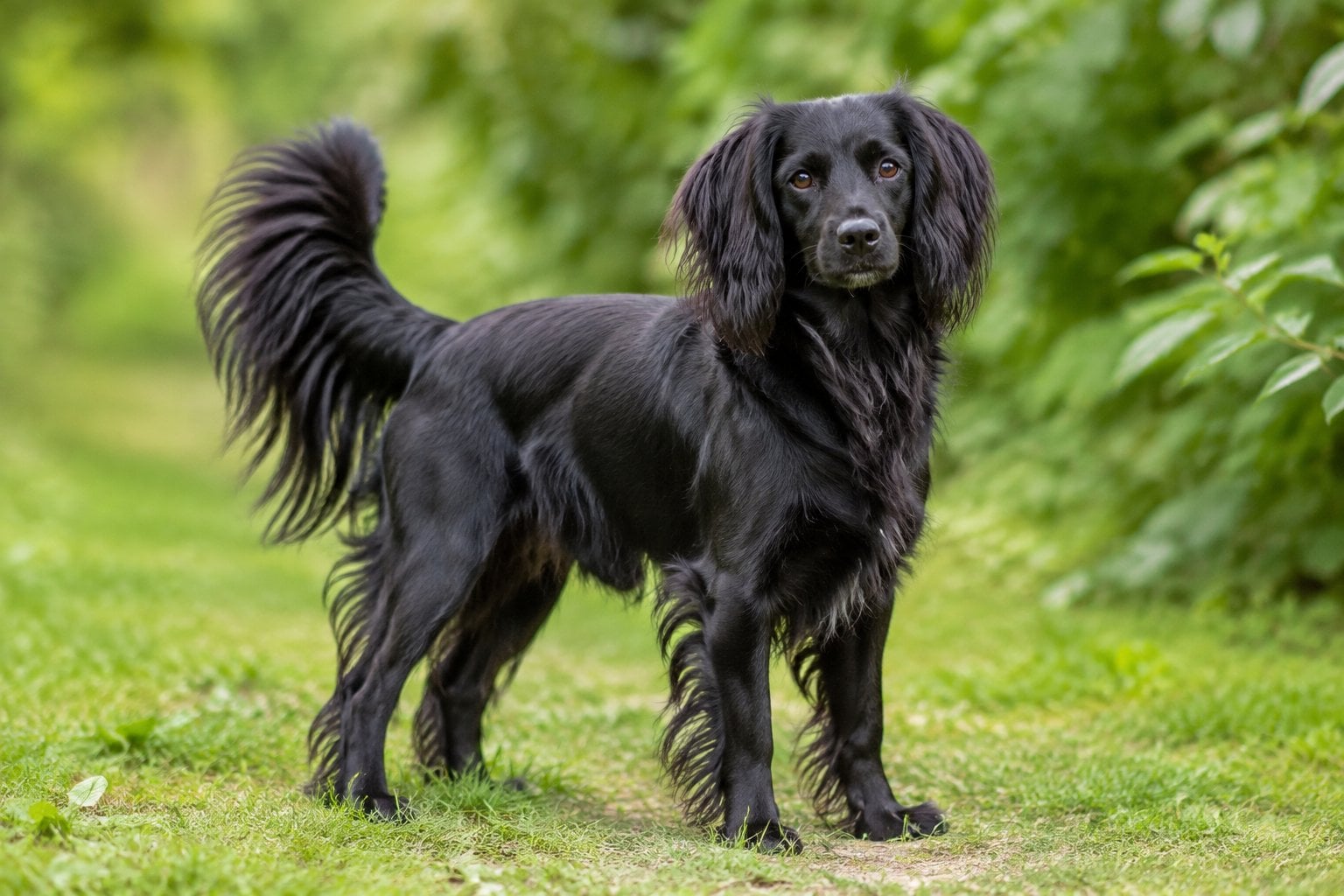
The Markiesje, also called the Dutch Tulip Dog, is a small companion breed from the Netherlands. If you look at paintings from the 17th and 18th centuries, you can find small black dogs that resemble it, which suggests the breed has deep roots in Dutch households.
You will recognize a Markiesje by its glossy black coat, feathered ears and tail, and expressive eyes. It stands roughly 13 to 16 inches tall, and its build is light and balanced.
The breed nearly disappeared in the 20th century. Dutch enthusiasts founded a breed club in 1979 to rebuild it, and the Dutch kennel club, the Raad van Beheer, later recognized it. Numbers remain very small, and the breed is rarely seen outside the Netherlands.
The Markiesje is not recognized by the AKC, the FCI or the UKC, so outside the Netherlands you will struggle to find one.
If you share your home with one, expect an alert, affectionate dog that bonds closely with its family and does well in smaller living spaces.
20. Schapendoes
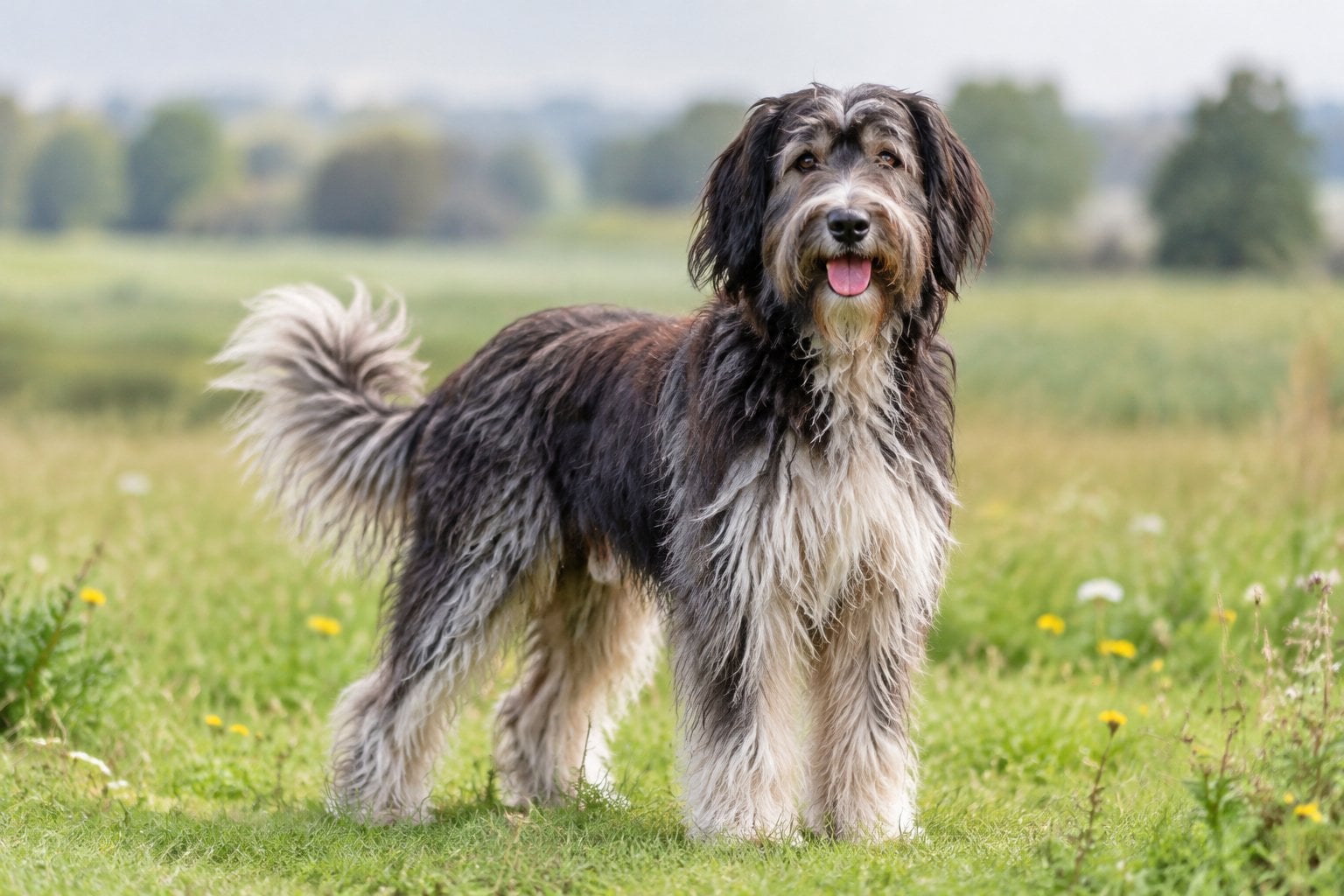
The Schapendoes, also called the Dutch Sheepdog, comes from the Netherlands. Farmers in the Dutch countryside used it as a herding dog, valued for its agility and endurance on open land.
The breed nearly disappeared during World War II. The modern Schapendoes descends from a small number of surviving dogs, which is a big reason the breed remains uncommon today.
A breed club was founded in 1947, when the Schapendoes was close to extinction, and the Dutch kennel club later recognized it. The FCI recognizes the Schapendoes, and the UKC lists it as well. The AKC has the breed in its Foundation Stock Service, which is a step toward full recognition.
You would notice its long, shaggy coat first. It comes in various colors, and the hair on the face often covers the eyes. The dog stands about 16 to 20 inches tall and has a light, athletic build.
If you want a Schapendoes, expect an energetic and friendly dog. It needs daily exercise, regular brushing, and mental activity to stay content.
21. Mudi
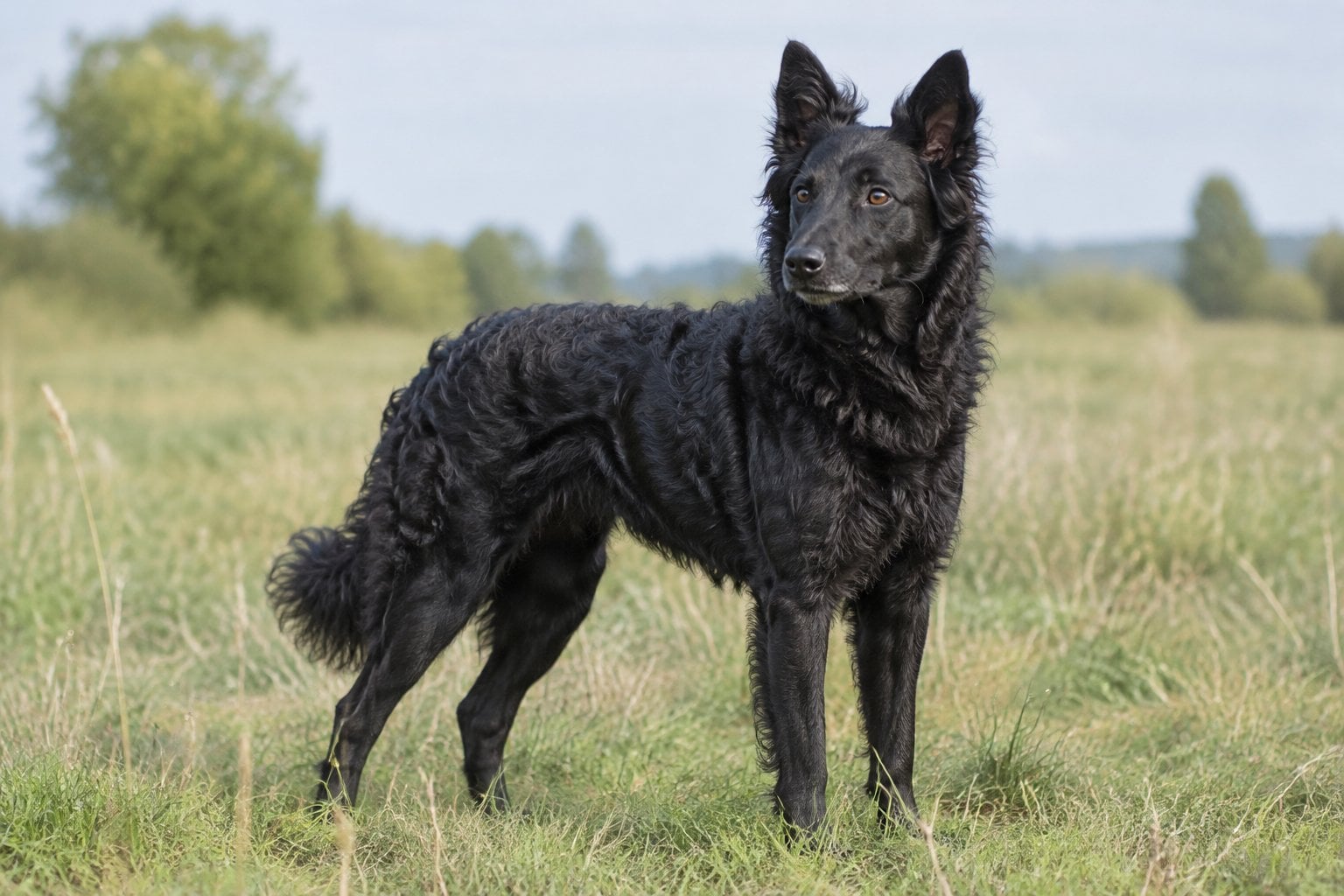
The Mudi is a Hungarian herding dog that developed on farms in the Carpathian Basin. Farmers valued it for driving cattle and sheep, guarding the homestead, and catching vermin. The breed is thought to descend from the natural crossing of local herding dogs, including the Puli and Pumi, with German Spitz types.
Ethnologist Dezső Fényes began documenting the breed in the 1930s and gave it the name Mudi. The Fédération Cynologique Internationale recognizes it. The American Kennel Club added it to its Herding Group in 2022, and the United Kennel Club also recognizes the breed.
You will rarely meet one outside Hungary. Numbers remain small worldwide. It is slowly catching on in the United States, but it still ranked only 125th of 202 AKC breeds in 2025.
If you want to own one, expect a medium-sized dog of about 18 to 29 pounds with a wavy or curly coat and erect, pointed ears. The Mudi is alert, quick to learn, and needs daily exercise and mental work. It is also known for its watchfulness and often barks to warn you of strangers.
22. Pumi
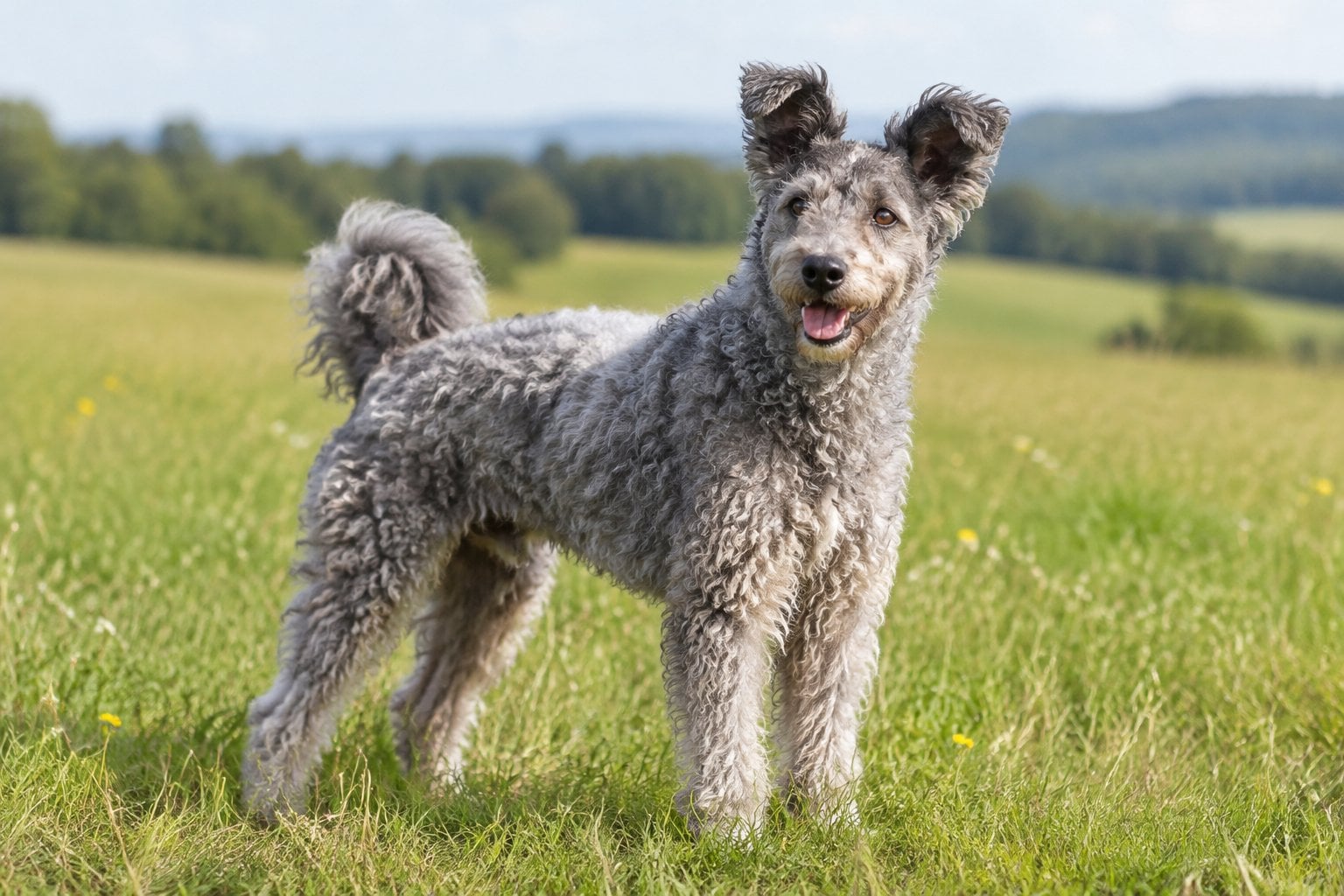
The Pumi is a medium-sized herding dog from Hungary. It developed in the 17th and 18th centuries, when Hungarian herders crossed the Puli with imported terrier and herding breeds. The result was a quick, alert dog used to drive cattle, sheep, and swine.
You will notice its curly coat and upright, semi-erect ears right away. The Pumi weighs about 20 to 30 pounds and stands roughly 15 to 19 inches tall. Its expressive face and animated manner are part of its appeal.
Breed standards were first recorded in the early 20th century. The Fédération Cynologique Internationale (FCI) recognizes it, and the United Kennel Club (UKC) does too. The American Kennel Club (AKC) added it to the Herding Group in 2016, and it ranked 160th of 202 breeds in 2025.
Outside Hungary, the Pumi remains uncommon, so you may need to contact a breed club to find a breeder.
If you bring one home, plan for daily exercise and mental work. The Pumi is intelligent, vocal, and energetic, and it does best with an active household.
23. Bergamasco Sheepdog
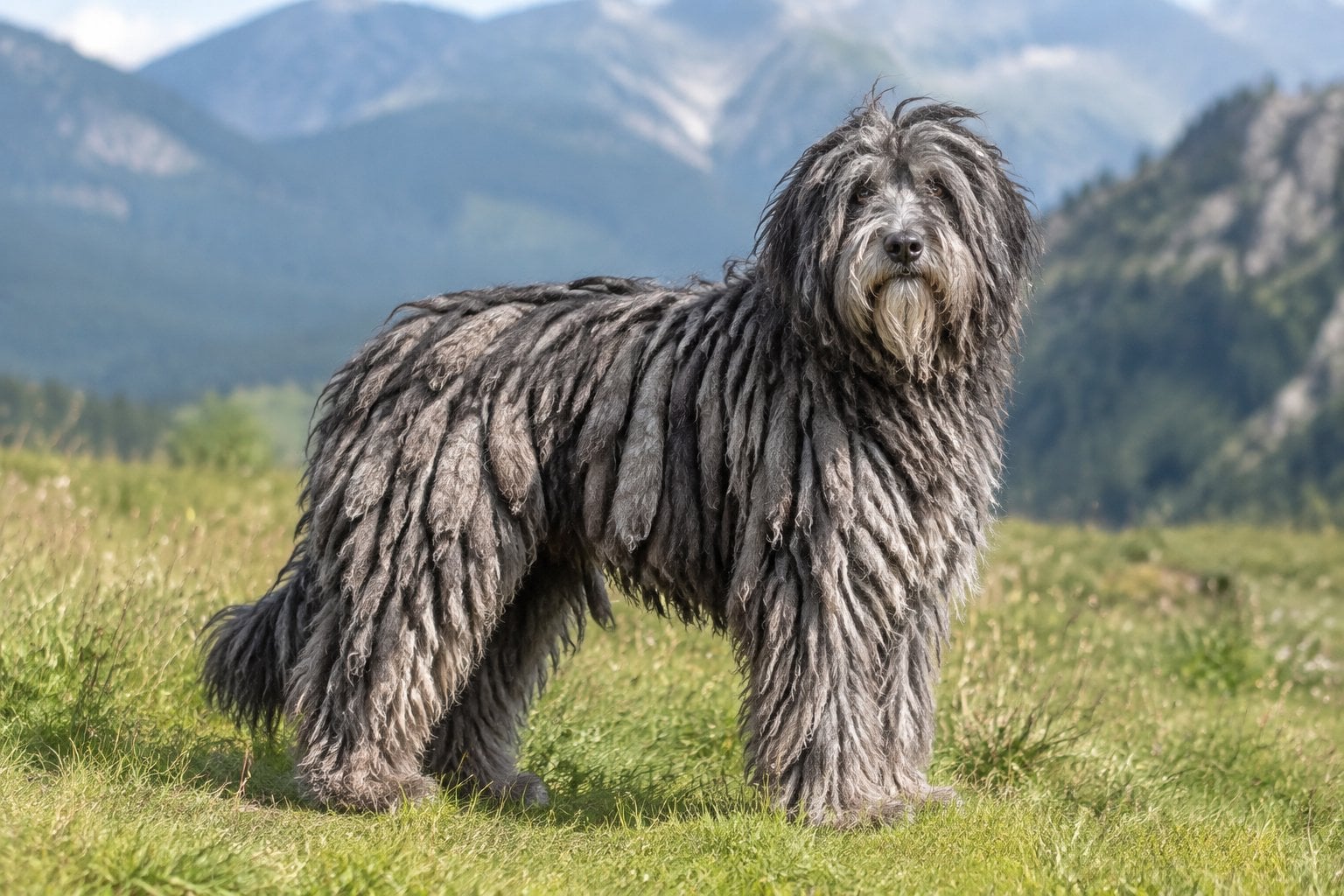
The Bergamasco Sheepdog comes from the Alpine and pre-Alpine regions of northern Italy, near the city of Bergamo. Shepherds there used it to move and guard sheep and cattle in mountain pastures. If you look at its history, you will find a working dog shaped by harsh terrain and changing weather.
Its coat is the first thing you notice. It has three types of hair that weave together into flat, felted mats called flocks, which grow longer as the dog ages. These mats offer protection against cold, rain, and heat.
The breed is rare outside Italy. Declining numbers of working shepherds reduced its use as a herder in the 20th century, and breed enthusiasts worked to preserve it. The Fédération Cynologique Internationale recognizes the breed, and the American Kennel Club added it to its Herding Group in 2015. It ranked 183rd of 202 AKC breeds in 2025.
You can expect a calm, patient, and loyal dog that bonds closely with its family. It is intelligent and trainable, though it can be reserved with strangers.
24. Cesky Terrier
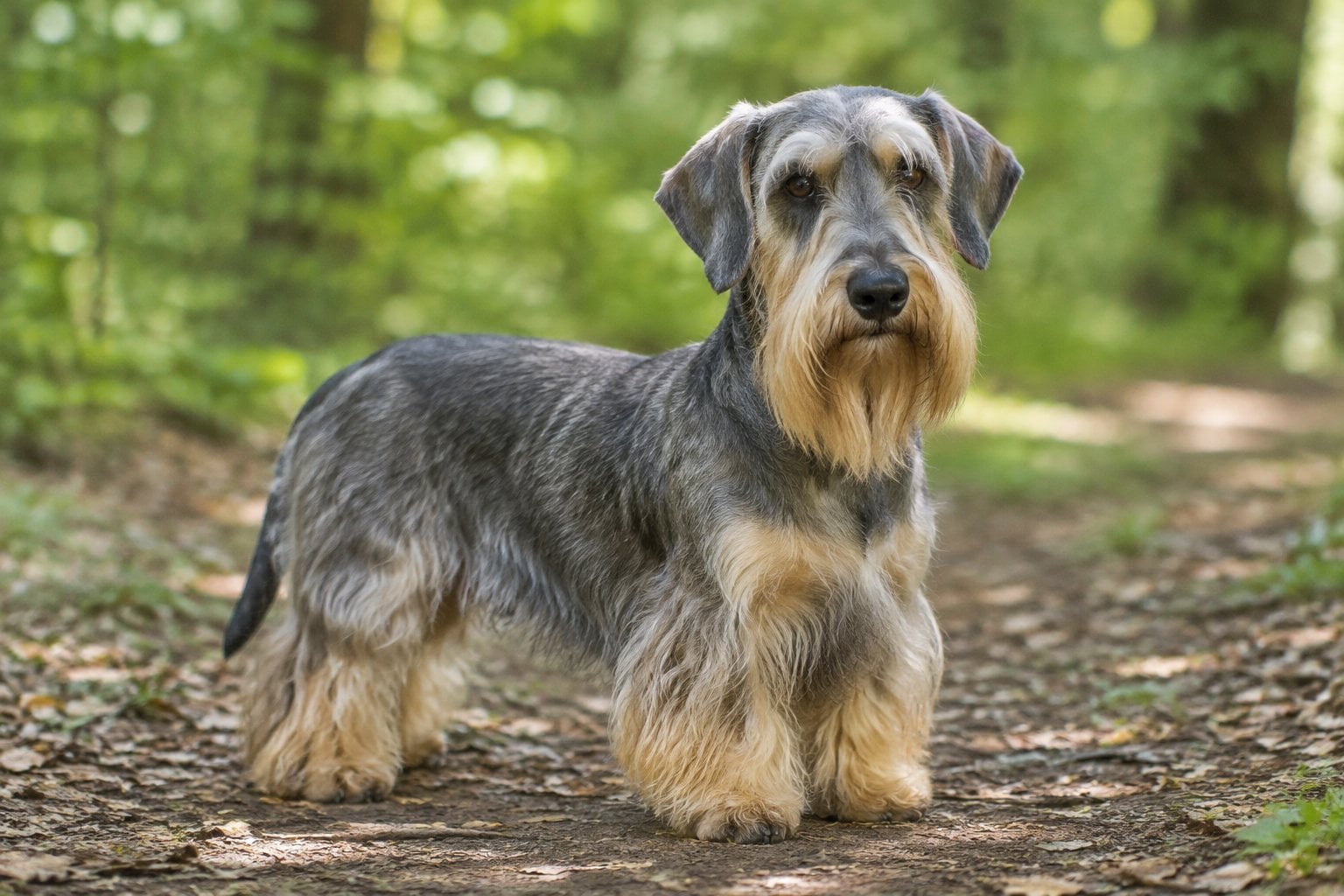
The Cesky Terrier comes from the Czech Republic, where geneticist and breeder František Horák developed it in the 1940s. He wanted a short-legged hunting terrier that could work in the forests of Bohemia and fit into narrow burrows. To get there, he crossed a Scottish Terrier with a Sealyham Terrier.
If you meet one, you will notice a long, low body and a soft, wavy coat that is usually gray-blue and clipped in a traditional pattern. The breed is calmer and less excitable than many other terriers, though it still carries a working instinct.
The breed is rare worldwide. The AKC recognized it in 2011, and in 2025 it ranked 197th of 202 breeds. The FCI and the UKC recognize it as well.
Annual registrations stay low in most countries, so you may need to contact a breed club to find a breeder.
25. Canaan Dog
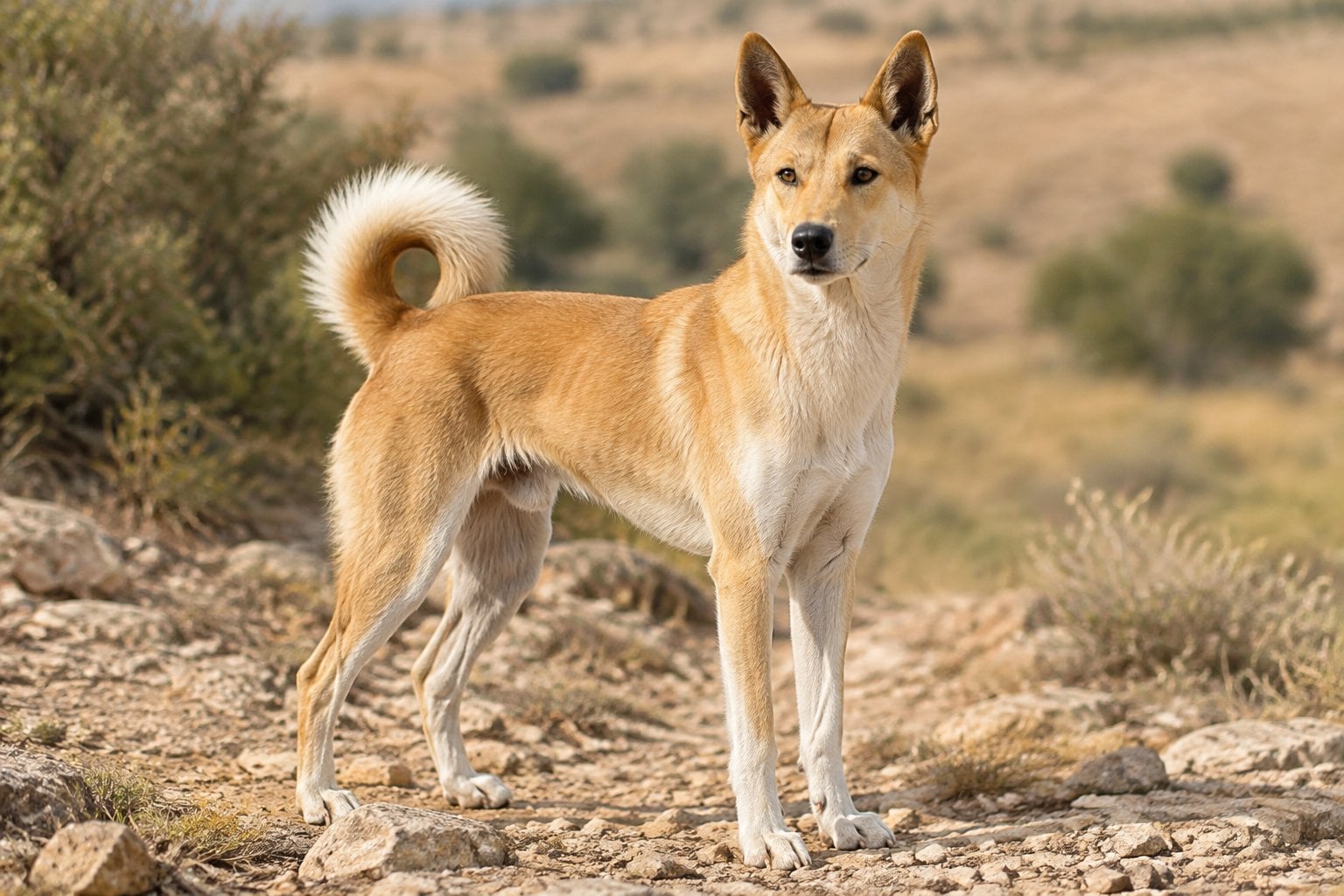
The Canaan Dog comes from the Middle East and is closely tied to Israel. Its ancestors lived as semi-wild pariah dogs in the region for thousands of years, long before any formal breeding began.
In the 1930s, Rudolphina Menzel and her husband started a breeding program in what was then British Mandate Palestine. They selected wild and feral dogs for temperament and trainability, and the dogs were used as sentries, messengers, and guards. The breed later served in military roles and as a guide dog for the blind.
If you meet one, you will notice a lean, medium-sized dog that stands about 19 to 24 inches at the shoulder, with a bushy tail and a wedge-shaped head. It is alert, vocal, and watchful, and it tends to be reserved with strangers.
The American Kennel Club recognized the breed in 1997, and in 2025 it ranked 193rd of 202. The FCI and the United Kennel Club also recognize it.
26. Azawakh
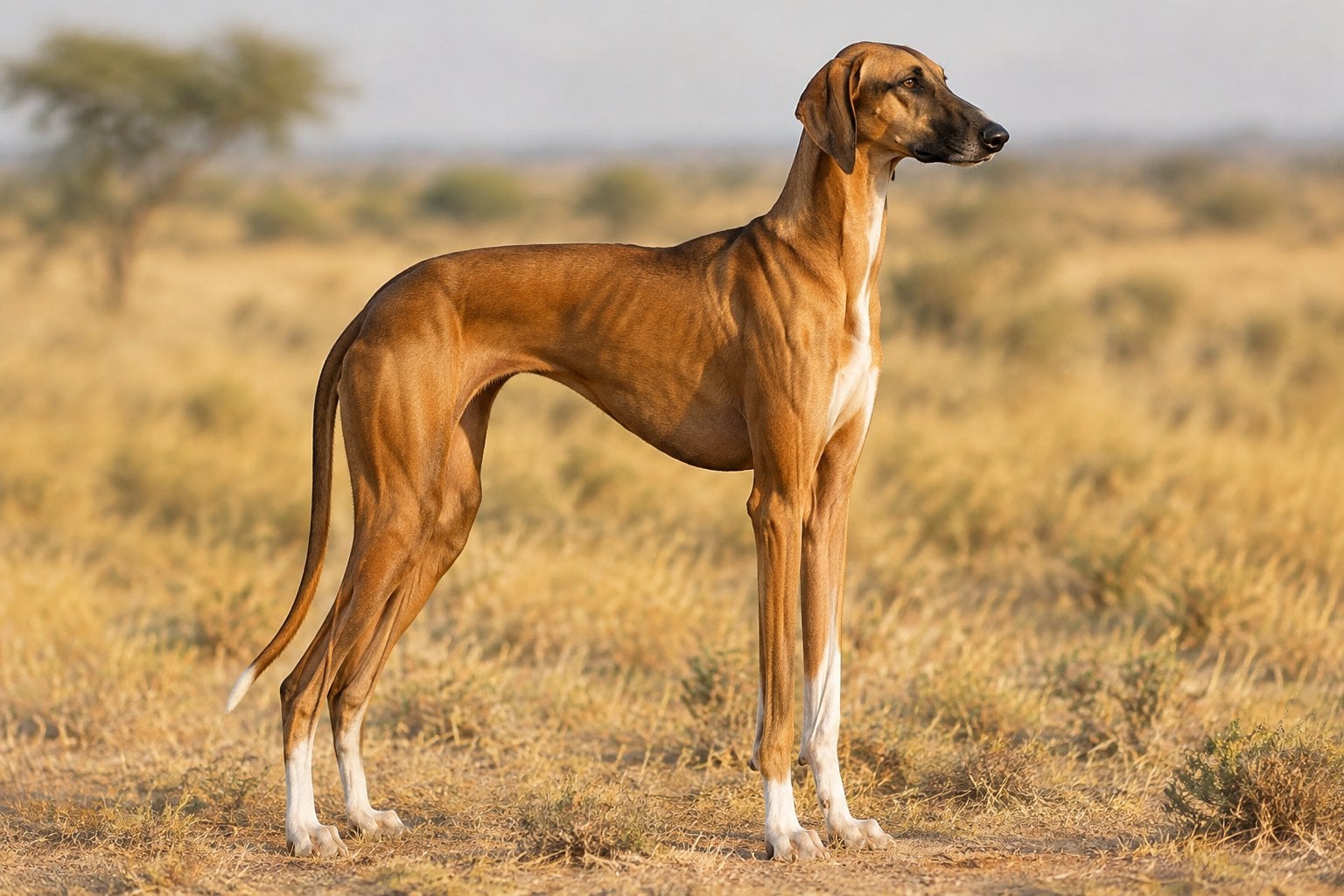
The Azawakh is a sighthound from the Sahel region of West Africa, with roots in Mali, Niger, and Burkina Faso. It is named after the Azawakh Valley, a dry basin that stretches across parts of Mali and Niger.
For centuries, nomadic Tuareg and other Sahelian peoples kept these dogs as hunters and guardians. They chased game such as hare and gazelle and protected camps and livestock from intruders.
If you meet one, you will notice a tall, lean dog with long legs and a short, fine coat. Males stand about 25 to 29 inches at the shoulder, and adults typically weigh 33 to 55 pounds.
Outside Africa, the breed remains uncommon. The FCI recognizes it with Mali as its country of origin, and the AKC admitted it to the Hound Group in 2019. It ranked 195th of 202 AKC breeds in 2025. The UKC also recognizes it. Westminster Kennel Club welcomed it for the first time in 2020.
Expect a reserved, loyal dog that bonds closely with its family and stays wary of strangers.
27. Sloughi
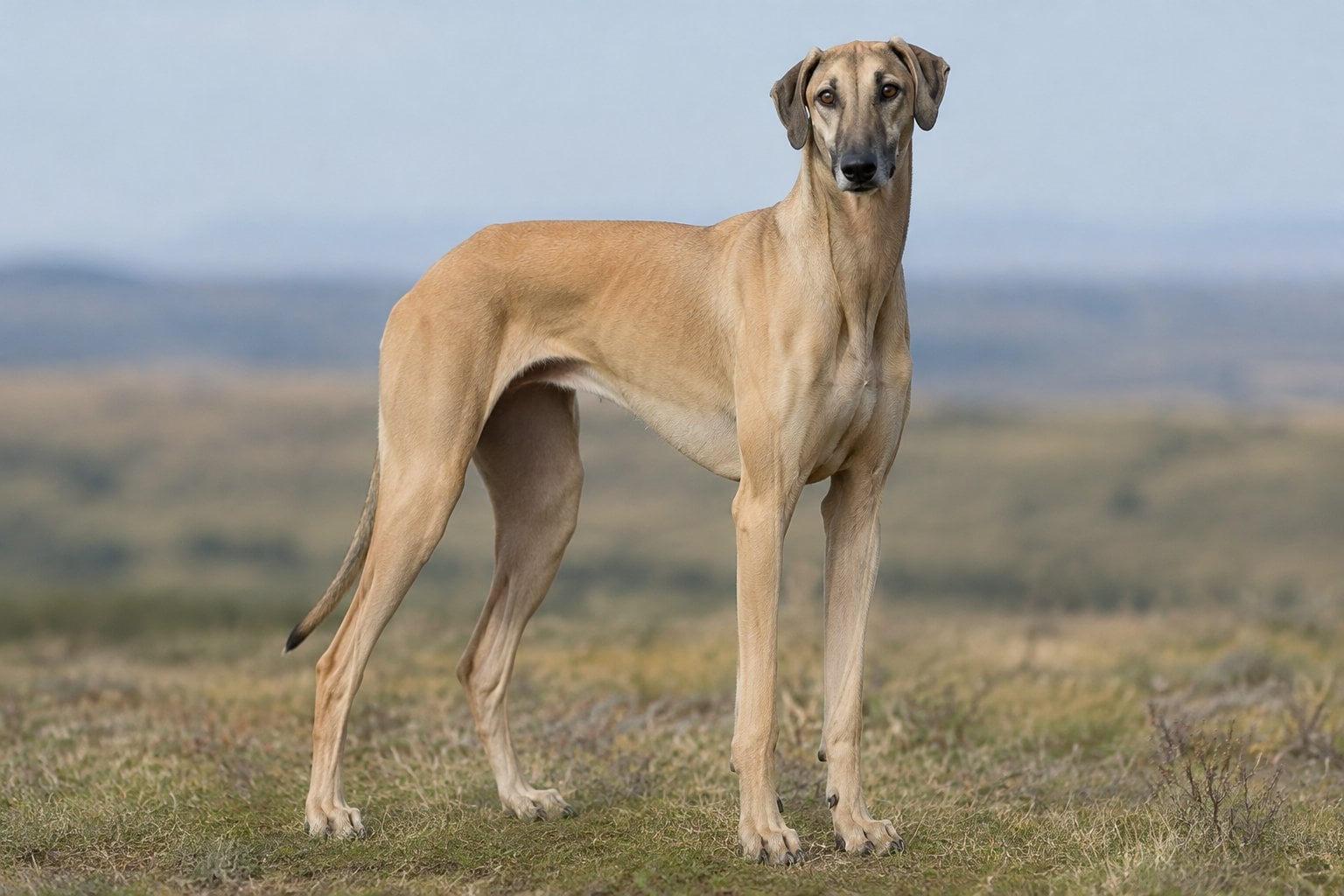
The Sloughi is a slim, short-coated sighthound that comes from North Africa, particularly Morocco, Algeria, and Tunisia. Nomadic Berber peoples kept these dogs for centuries to hunt hare, gazelle, and jackal, and to guard camps.
If you meet one, you will notice a lean, athletic build with a fine, smooth coat in sand, fawn, or brindle shades. The breed typically has a dark mask and a dignified, slightly reserved expression.
The Sloughi is rare outside its home region. The American Kennel Club recognized it in 2016, and in 2025 it ranked 201st of 202 breeds. Only the Norwegian Lundehund was rarer. The Fédération Cynologique Internationale lists it under Morocco as its country of origin, and the United Kennel Club also recognizes it.
You should expect a sensitive, quiet dog that bonds closely with its family and tends to be wary of strangers. It needs regular exercise and a secure fenced area, since its strong chase instinct can take it after small animals.
28. Thai Ridgeback
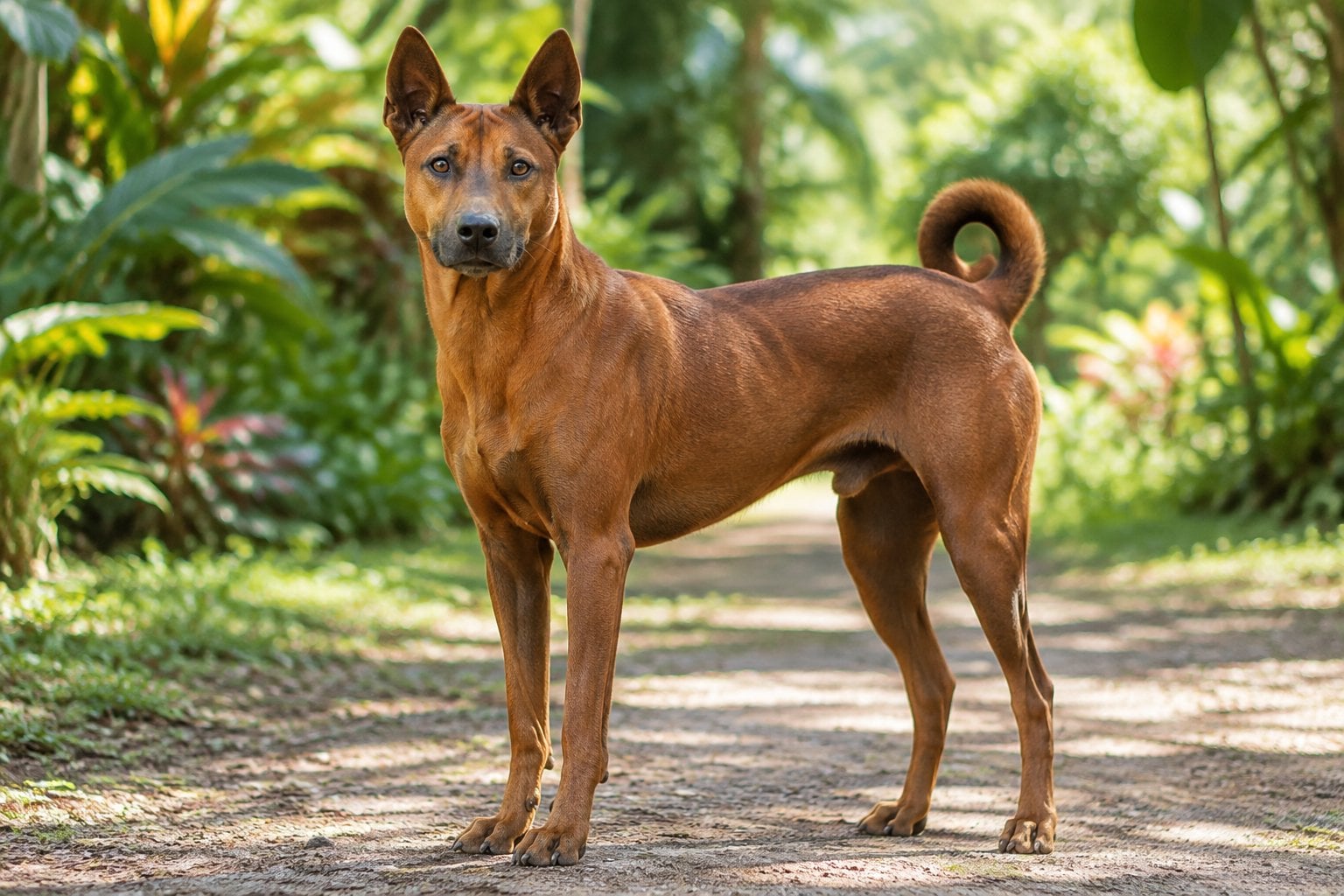
The Thai Ridgeback comes from eastern Thailand, where it developed in rural areas such as Rayong, Chanthaburi, and Trat. Breed historians believe the dog has existed there for centuries. Villagers kept it as a hunter, guard, and companion.
You can spot the breed by the ridge of hair along its back, which grows in the opposite direction of the rest of its short, smooth coat. Only three recognized breeds carry this trait. The Thai Ridgeback is a muscular, medium-sized dog built for speed and endurance.
The breed remains uncommon outside Southeast Asia. Its isolated origins kept numbers low for a long time, and no widely reported population figures exist.
The Fédération Cynologique Internationale and the United Kennel Club recognize it. In the AKC, it is part of the Foundation Stock Service and has been allowed in companion events and lure coursing since 2008.
If you take one on, expect a reserved, intelligent, and independent dog that bonds closely with its family and needs an experienced owner.
29. Phu Quoc Ridgeback
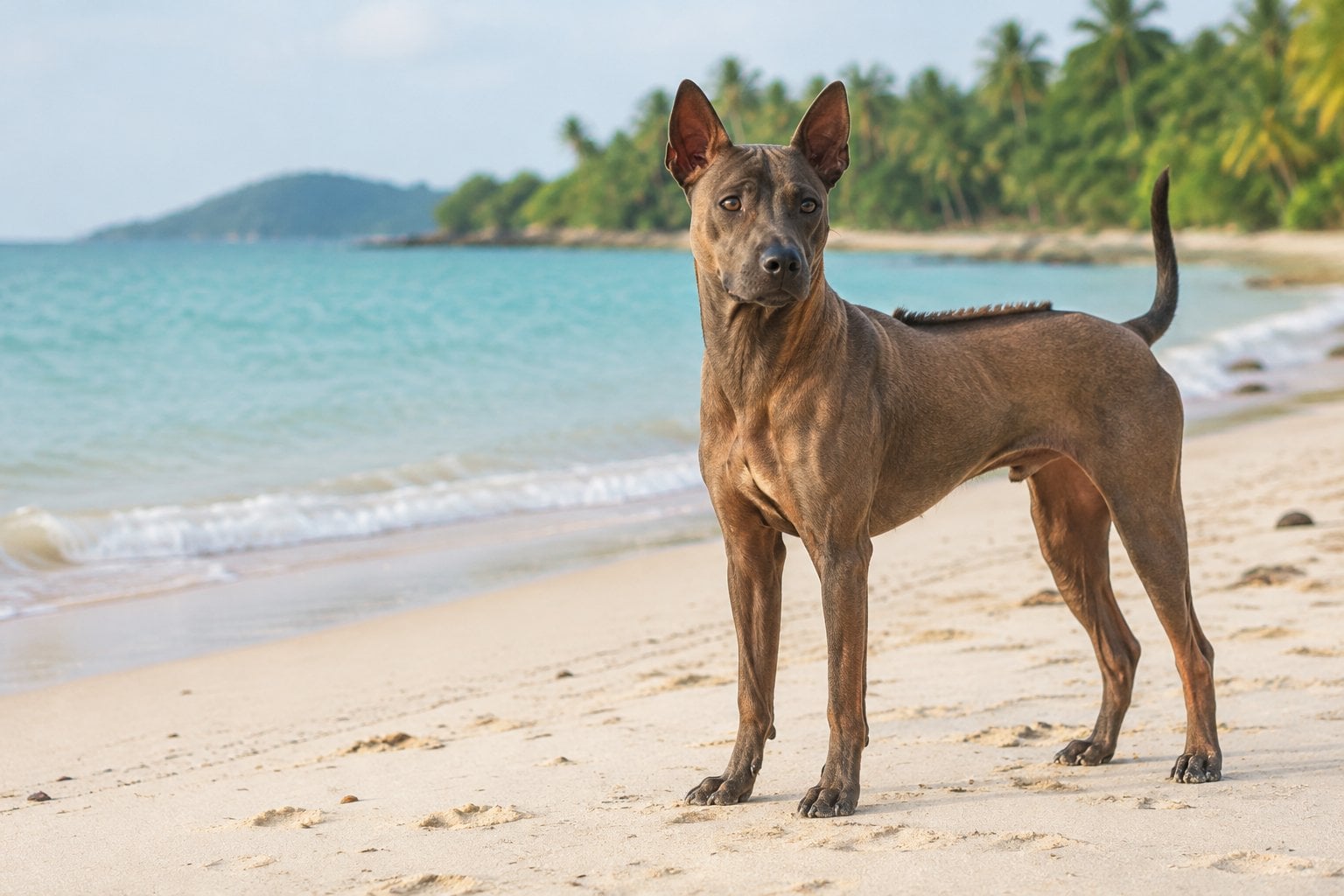
The Phu Quoc Ridgeback comes from Phu Quoc Island, off the southern coast of Vietnam. It is one of only three ridgeback breeds in the world, alongside the Rhodesian Ridgeback and the Thai Ridgeback.
If you look at its back, you will see the feature that gives the breed its name. A strip of hair grows in the opposite direction to the rest of the coat, forming a visible ridge.
Islanders kept these dogs for hunting and guarding property. The breed is lean, muscular, and agile, with a short coat and a build suited to a warm climate.
You will find the breed is rare outside its home island. Breeders in Vietnam have worked to preserve the dogs.
The Vietnam Kennel Association recognizes it, but the AKC and the FCI do not. The UKC only records bloodlines, with no breed standard, so the dogs cannot be shown there.
If you meet one, expect an intelligent, alert dog that needs regular exercise and firm, consistent training.
30. Peruvian Inca Orchid
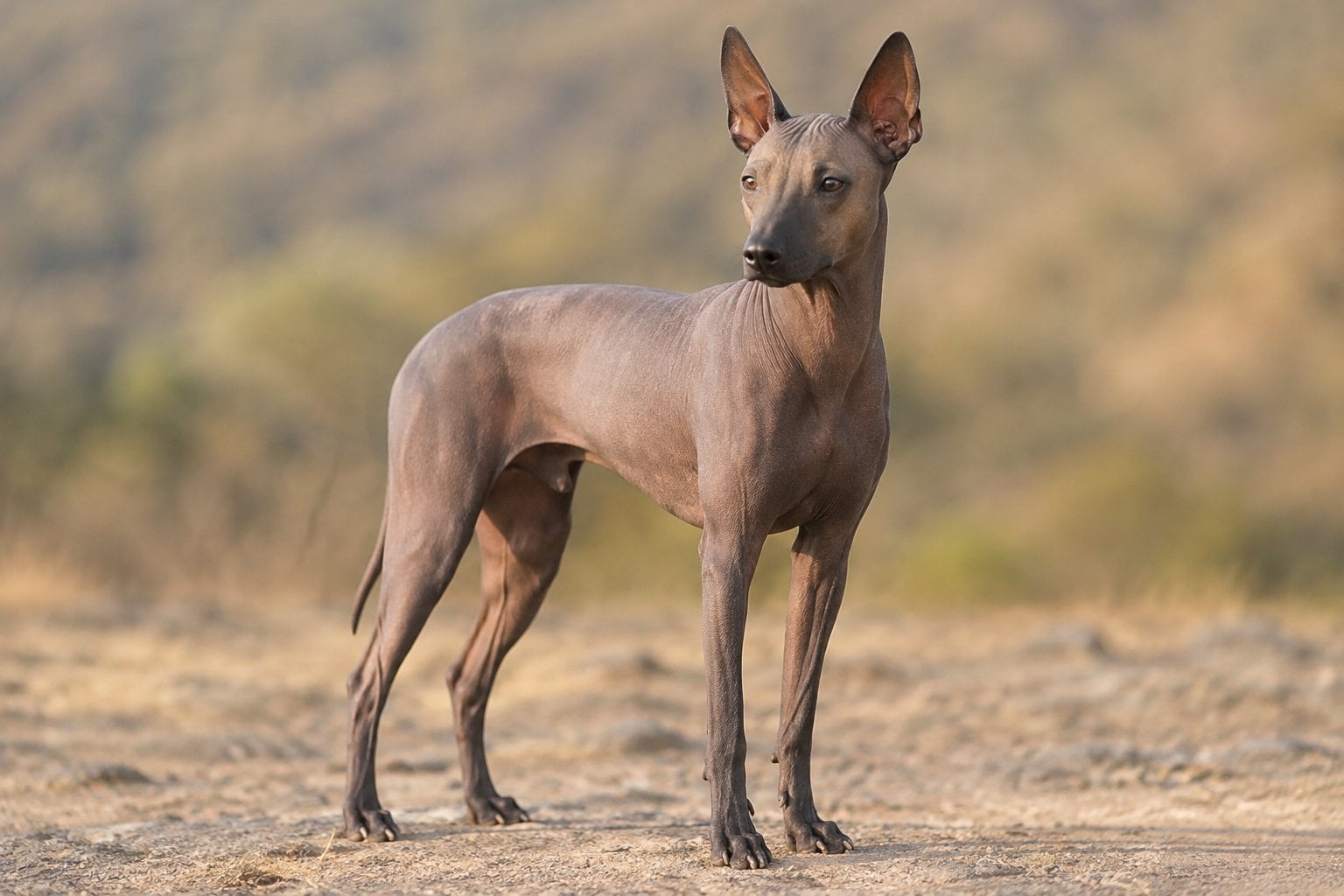
The Peruvian Inca Orchid, also called the Peruvian Hairless Dog, is the national dog of Peru. Its roots go back more than a thousand years, and similar hairless dogs appear in pottery from pre-Incan cultures such as the Moche and Chimú.
You will find three size varieties: small, medium, and large. Most dogs are hairless, though a coated variety exists and appears in the same litters. Hairless dogs have smooth skin, a lean build, a pointed head, erect ears, and a long, thin tail.
The breed is rare outside Peru. The Fédération Cynologique Internationale recognizes it as the Peruvian Hairless Dog. The United Kennel Club recognizes it too. The American Kennel Club has had it in its Miscellaneous Class since 2011, and it is set to join the Hound Group as a fully recognized breed at the start of 2027.
If you live with one, expect an alert, loyal, and affectionate dog that bonds closely with its family. It can be reserved around strangers, so early socialization helps. Because the skin is exposed, you will need to protect it from sunburn and cold weather.
Many of these breeds are still here only because small groups of breeders and clubs kept them going after their old jobs disappeared. If one of them caught your eye, start with the national breed club, and be ready for a long waiting list.
Want more uncommon dogs? See our list of rare dogs that time almost forgot. And if you are weighing the cost of a new dog, check out the most expensive dog breeds to own.